
Just as global warming is changing everything around us, shifting geopolitical forces are also transforming the way we think about wellness. In India, wellness trends are moving towards a goal-driven, clearly evidence-backed approach that represents a modern reinterpretation of traditional systems. Even practices such as Ayurveda are undergoing thoughtful recalibration. There is a strong emphasis on mental well-being and community fitness across sectors. Traditional medicine and practices like Ayurveda are being re-examined through a contemporary lens, blending scientific precision with natural remedies.
Indians are now finally warming up to holistic wellness, in its many avatars. These offerings are increasingly being made available, even in corporate settings, to help people cope with burgeoning work patterns. Given the circumstances, post-pandemic, there seems to be a greater emphasis on sustainable, holistic living. Ancient practices like Ayurveda, when combined with contemporary health solutions, appeal to a diverse consumer base. Many resorts have completely changed their playbook, now catering to the demands of slow living and a wholesome, nutritious way of life.
Business India met with the CEO of CGH Earth Wellness, Sidarth Dominic, who spearheads the company’s holistic wellness division while being an integral part of a large hotel conglomerate. As Executive Director since 1993, Dominic has played a pivotal role in conceptualising and launching several CGH Earth resorts and hospitals, as well as other leisure-sector resorts such as Coconut Lagoon and Spice Coast Cruises, to name a few. In 2012, Dominic focused on developing human capital for CGH Earth, emphasising the importance of transforming ordinary people into extraordinary ones. His initial journey began with his brothers, who started at the Bangaram Island Resort in Lakshadweep, the company’s first offering, where he developed a deep understanding of the company’s core values.

Seated in one of the conference rooms of their first hotels in Kochi was the 57-year-old Dominic, one of the five brothers who run the chain. “I think for us, as an enterprise, the transition from being what my father, Dominic Joseph, started from this very Casino Hotel into becoming CGH Earth Hotels came when we got the opportunity to start the Bangaram Island Resort in Lakshadweep (1988), where we were the first bidders.”
A whole new way of tourism
As hoteliers, they understood that to follow certain rules, they would have to keep the environment intact. Keeping that in mind, they did not introduce power sports at their resort, offering instead only wind- and muscle-powered activities. They even started India’s first scuba diving initiative in Bangaram. He added: “Mind you, nobody in 1988 was saying that the environment is absolutely paramount, but we kept our promise: the hotel was devoid of unnecessary luxury.” Twenty-five years later, they still talk about how it helped them start a whole new way of tourism; environmentally sustainable tourism.
Dominic, who studied in the mountains (Yercaud), graduated from Loyola College (Chennai). He thereafter joined the business on the resort side simply to learn the ropes, as Jose, his elder brother, put everything in motion as the visionary. Dominic then went back to pursue his diploma (MBA) at IIM Ahmedabad. Jose, George, and Thomas were primarily involved in the Bangaram Resort, as their father had already semi-retired. Sidarth moved in and joined his brother Michael at their new property, Spice Village, in Thekkady (1991).
As the properties grew in number, each of the six brothers was given two resorts to run. They began to change their structure as they moved along, and all of them were actively involved in the company’s growth. After all, they had a large canvas to work with, as Kerala has always been a multi-layered and diverse state dotted with palm-lined beaches, backwaters, coffee and tea plantations, as well as wildlife. They started resorts by the Vembanad Lake, then by Marari Beach, then leased land from the Port Trust and built Brunton Boatyard right there. Many more followed.
The CGH Earth chain of hotels, on the mainstream side, offered experiences that helped guests explore nature, community and culture intimately. They had different hotels that showcased local ethos, art and culture, environment, cuisine, heritage and conservation, with common areas doubling as galleries and stages for artists and performers. They made traditional architectural designs and buildings look unique in each location. Being a people-friendly conglomerate, they became essentially an extension of villages, towns and the people who lived there, imbibing their local customs.
Their properties are still cared for like monuments and museums filled with precious artefacts from a bygone era. They are inclusive, reflecting the destination’s local ethos. They decided: “Our offerings were going to be so unique that when one touches, feels and smells – you know – the ethos of that destination could be experienced.” But the pricing, of course, was also on a par with the best. The chain then built flight kitchens all over; they now have 12 across India.
The brand had come to understand leisure resorts by then. But foraying into wellness did not get the family’s vote, because wellness was not that well-known. “Most times, the boardroom was like a war room because many of the members were stating that we would be wasting our time,” added Sidarth. But Jose suggested, “Let’s make it 100 per cent Ayurveda or nothing.” In year one, they did not have many guests, and many of their trade partners began to dissuade them. “Make the stays shorter, offer some massages with lobster and wine, and you will be fine.”
But since they had committed to the idea, they intensified their research, engaging with the Kottakkal Arya Vaidya Sala: the heartland of Ayurveda. Despite two burning years, 30-year-old Dominic followed his dream, engaging and exploring fairs across the country until he was ready to offer Ayurveda to the world. They started Kalari at $500 a day. But did it work? India was ready, and so were they.
Then the pandemic struck, and by the end of Covid, they were back in demand as people wanted to be far from cities and began investing in their health and immunity. Their clinics began receiving recognition through word of mouth. International clients have, to date, repeated their treatments, but the brand has become far more visible in the domestic market. Dominic went on to add: “We’ve had our best numbers in the last 3 years. From a business angle, in Ayurveda, we found that the cost of running the property was much less than that of other resorts. We did not need the kind of chefs that others required: we only needed people who were focused on Ayurvedic cuisine.”
Even though they did not need bars, spas, multiple restaurants and all the other amenities, they still had to focus their investment on the medical team, primarily top doctors who would live on the property as they were needed at all times. They found that their operating margins in wellness were significantly higher. While the resorts were generating 30-35 per cent operating margins, wellness was approaching almost 50 per cent. They realised that, as a business, they had found their sweet spot. Marketing, however, remained the hard part. Mridula Jose, the eldest brother’s daughter, entered the fray and now looks after the brand’s marketing.
Ayurveda is the way to disease-free living
By now, Dominic had gained experience, understood the dynamics of wellness and what the foreign traveller needed, and was ready to build the wellness arm of the group. He was fully committed to seeing CGH Earth Ayurveda prosper. They began offering treatments built on the tenets of Ayurveda: the ancient Indian system of healing. The focus is on treating the root causes of ailments rather than merely the symptoms, so that one remains healthy physically, emotionally and spiritually. Considering how entrenched the group is in the wellness industry, it has dedicated four of its premium properties to this cause.
Landing in Goa and driving south, one enters Karnataka. Soon, SwaSwara in Gokarna came into being. The brand began by offering yoga and Ayurveda on the pristine Om Beach, amidst birdsong and ocean waves. Not an ashram or a spa, it became a sanctuary – more a healing retreat – where one could live in tranquillity, far from the madding crowd. SwaSwara introduced hilltop meditation spaces to amplify one’s consciousness.
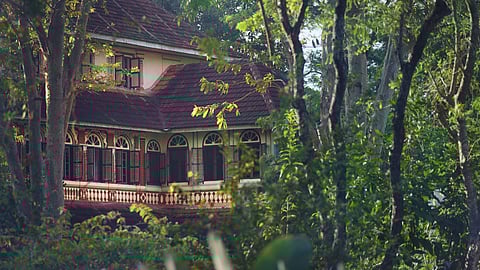
Simultaneously, Kalari Kovilakom was resurrected from a 200-year-old palace with a history enviable by the best. It became an Ayurveda-focused clinic and was positioned as Kalari Kovilakom (NABH-accredited Ayurveda Hospital), located near Kollengode in the Palakkad district of Kerala. Kalari Kovilakom is set within palace grounds and offers 19 well-appointed suites with modern amenities, along with a clinic housing 12 treatment rooms. Here, their Vaidyas help guests achieve holistic health. They restore balance through the curative and eliminative processes of Ayurveda, supported by Ayurvedic therapies, yoga, meditation, proper breathing techniques, diet and sleep tailored to individual doshas.
After SwaSwara came Visalam. They realised they could benefit more from an asset-light model. Until then, they had always bought their properties and built from scratch, but Kalari Kovilakom and Visalam taught them that leasing was a better option. From then on, they expanded into Pondicherry and beyond. As the brothers retired one by one, Michael took over the leisure hotels, and Dominic fully assumed leadership of the wellness arm.
They launched Kalari Rasayana, another NABH-accredited Ayurveda hospital. Here, healing is offered by a serene lake. Located on the banks of the Paravur backwaters and spread over eight acres of coconut groves, it has 22 rooms with modern amenities and 11 treatment rooms. Ayurveda is practised in its most authentic form. A complete lifestyle chart for disease-free living, intricately personalised and combining yoga, meditation and a diet rich in medicinal value, is prepared by their Vaidyas. They address the source of ailments, not merely the symptoms.
Prakriti Shakti (NABH-accredited Naturopathy Hospital) soon followed. Set in the hills of Panchalimedu, this clinic of natural medicine is strategically designed. It is a naturopathy hospital that utilises all-natural curative science within a nurturing and healing ecosystem. Here, Vaidyas treat the root cause of disease. Part of the healing journey includes raw, organic food served in gourmet style, presented in a rainbow of colours by innovative chefs in a fireless kitchen. Doctors prescribe a sustainable, personalised lifestyle that harnesses the power of earth, water, fire, air and space, guided by a deep understanding of Prakruti Chikitsa to enable holistic healing.
Holistic treatments
Ayurveda is not the quick fix that many of us think it is. It is a journey of deep restoration that honours the rhythms of the body, mind and spirit. A minimum number of days is essential, as the body needs time to detoxify, recalibrate and begin responding to treatment. The first few days prepare the body for internal cleansing and gentle therapies. Ayurvedic treatments aim to address the root cause, and that requires patience and progression. For chronic conditions, lifestyle imbalances or emotional stress, the process may take several weeks to allow the body to fully absorb the benefits. Ayurveda believes that true healing unfolds gradually.
Before treatment, every patient must complete the Preliminary Assessment Form at the time of booking. Only patients aged 15 and above are treated. Panchakarma is an intensive cleansing treatment that literally means ‘five actions’ and focuses on purifying the body. The five actions include Vamana (induced vomiting), Virechana (purgation), Kashaya Vasti and Sneha Vasti (two types of medicated enemas), and Nasya (nasal medication). It is preceded by Poorvakarma, during which the body is prepared for toxin removal.
Shodhana Chikitsa works by increasing metabolism, helping the body utilise fat and enhance vitality, thereby reducing excess accumulation. Manashanti Chikitsa relieves the ill effects of stress, insomnia, lack of concentration, fatigue and headaches. Rasayana Chikitsa rejuvenates and regenerates cells, promotes mental well-being, enhances intellectual function and boosts immunity.
Lifestyle in Kalari Kovilakom
From personal experience, one notices that to achieve optimal results, electronic gadgets are best avoided, as the treatments are serious and require immersion in a supportive ecosystem. Phones, iPads and laptops are permitted in private rooms, but not in common areas. Maintaining silence keeps unnecessary thoughts and conversations at bay. Sunbathing or excessive exposure to the sun is discouraged to allow treatments to take their natural course.
Early rising and preparing the body and mind with walks and yoga practices before and after treatments are highly beneficial. Daytime napping is not permitted. Maintaining the prescribed diet is imperative, as chefs customise every meal according to the doctor’s recommendations, aligned with the patient’s doshas.
Treatments alternated between Dhatupushti Uzhichil, Shirodhara, Ela Kizhi, Nasyam, Thakra Dhara, Udwarthanam, Njavara Kizhi and Mukhalepam, and were rejuvenating and deeply de-stressing.
“At CGH Earth Wellness, our guiding principle has always been the integrity of medical practice, delivered with uncompromising discipline and safeguarded by international standards of safety and quality. We believe true wellness flourishes through personalisation, which is why we consciously limit patient numbers to 20-25 at any given time, ensuring every individual receives deeply attentive care. Ours is not a crowded wellness centre; the very sense of space and exclusivity we offer is, in itself, a rare luxury. The wellness sector is expanding rapidly, and we are confident – indeed bullish – about its future. Our growth journey is defined by a steadfast commitment to excellence, where every step forward enriches the quality of delivery. Our vision is to strengthen CGH Earth Wellness’s role as a leader in holistic wellness, setting benchmarks that inspire others, while remaining unwavering in our values and standards,” says Dominic.
As CEO of CGH Earth Wellness since 2018, Dominic aims to establish the brand as a leader in alternative and holistic wellness.