
Fuelling shipping’s green future
With an estimated 450,000 seafarers needing additional training by 2030 and 800,000 by the mid-2030s, there is a pressing need to develop a skilled workforce capable of operating and maintaining alternative propulsion technology. The global green shipping market is projected to grow from $26 billion currently to $110 billion by 2034, driven by a 17.35 per cent CAGR and tightening international regulations. And India could become a competitive regional hub for alternative marine fuels in the years to come, provided the country smartly addresses fuel pricing, port efficiency and operational readiness, according to maritime industry experts.
The global shipping industry is facing a massive workforce transformation, requiring nearly 800,000 seafarers to be upskilled by the mid-2030s to handle alternative green fuels. As the International Maritime Organisation pushes towards zero and near-zero greenhouse gas emissions, the move away from heavy fuel oil as fuel in cargo ships introduces unprecedented complex technologies and dangerous handling hazards directly onto ships. Basic training alone for seafarers is projected to cost well over $1 billion globally, excluding logistical costs like travel and accommodation for the merchant navy workforce.
As India supplies roughly 325,000 (12 per cent) of the global seafaring workforce, making it the third-largest provider of maritime manpower, it has become crucial to impart specialised training to Indian seafarers for operating cargo ships powered by alternative fuels and energy-efficient technologies. With an estimated 450,000 seafarers needing additional training by 2030 and 800,000 by the mid-2030s, there is a pressing need to develop a skilled workforce capable of operating and maintaining alternative propulsion technology.

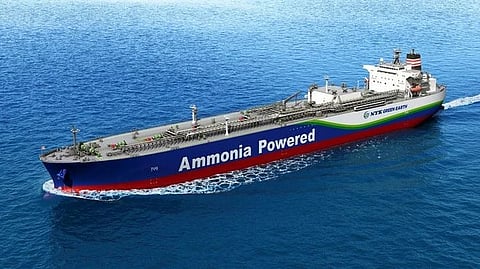
“We have completed our first pilot training courses on ammonia as a marine fuel and run structured methanol courses at basic, advanced and engine-familiarisation levels,” affirmed Aalok Sharma, group director, training, Anglo-Eastern. “More than 3,000 seafarers have now passed through our alternative-fuel training programmes.” One of the largest employers of Indian seafarers and a global shipping conglomerate, Hong Kong-headquartered Anglo-Eastern operates India’s premier maritime training institute, Anglo-Eastern Maritime Academy (AEMA). Located near Mumbai, AEMA offers specialised training programmes for seafarers handling and steering next-generation ammonia-fuelled ships.
Zero-emission propulsion
Going forward, next-generation cargo and container ships are shifting towards zero-emission propulsion, autonomous navigation, and massive scale. Next-generation cargo ships deliver breakthroughs in environmental sustainability, operating efficiency and technological automation. Next-generation designs slash greenhouse gas output. Wind-assisted propulsion (rotor sails, rigid wing sails and suction sails) and dedicated wind-powered vessels cut CO2 emissions by 5 per cent to over 90 per cent, compared to conventional diesel ships. Utilising liquefied natural gas (LNG), synthetic methanol and ammonia dual-fuel engines drastically reduce sulphur, nitrogen and carbon footprints. Low-resistance bio-inspired hulls, lightweight composite structures, and gas-electric hybrid power packs minimise drag and lower fuel consumption by up to 3 per cent to 20 per cent. Modern cargo modules in these kinds of ships come equipped with real-time sensors to track exact location, internal temperature and humidity, ensuring high-value goods remain protected.
The International Maritime Organization (IMO) adopted its first global safety code for Maritime Autonomous Surface Ships (MASS), which took effect in mid-2026, setting the regulatory groundwork for semi-autonomous and remote-controlled vessel operations (though human crews remain mandatory). Thereafter, over 119 alternative fuel ships were ordered in a single wave, heavily focusing on LNG and green methanol dual-fuel propulsion. Carriers like Hapag-Lloyd ordered methanol dual-fuel ships (such as 4,500 TEU vessels for delivery in 2028-29), while CMA CGM and MSC integrated new LNG- and methanol-powered flagships like CMA CGM Notre Dame. COSCO is committed to 48 new builds in 2026 alone, totalling roughly 676,800 TEU and an $8 billion investment as its fleet crosses the 34-million TEU mark. Other major shipping lines including MSC, Evergreen, while PIL continued expanding capacity through 2026. Industry planners are designing the next step up in container shipping. Companies like MPC Container Ships ASA are acquiring eco-friendly 7,000 TEU units featuring high-efficiency propellers and low-energy engines to rejuvenate regional and global feeder networks.