
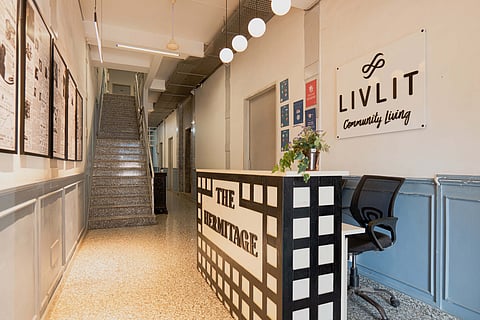
Sensing immense potential for organised rental housing, Livlit moves ahead
Mumbai-based Livlit is steadily emerging as one of the city’s notable organised co-living operators, catering to students and young working professionals seeking flexible, community-driven accommodation. At a time when Mumbai’s rising rentals and long commuting hours continue to pose challenges for migrants, the company is positioning itself as a curated living solutions platform offering managed housing with hospitality-style services.
Founded in 2021 by Mayank Bajaj, Livlit operates about 10 properties with 850-875 beds across locations in Mumbai, such as Fort, Ballard Estate, BKC, Kurla, Worli, Prabhadevi and Nerul. The company is set to expand its portfolio further with new properties in Turbhe and Juhu becoming operational from 1 June, taking its overall capacity to nearly 1,100 beds.
Bajaj, a chartered accountant and lawyer by qualification, previously worked with KPMG and Edelweiss in the real estate and financial services domain. His exposure to real estate financing and urban housing trends played a key role in shaping Livlit’s business model.
The idea behind Livlit emerged during the pandemic when a family-owned apartment became vacant after tenants moved back to their hometowns. Instead of leasing the apartment to another family, Bajaj experimented with renting out individual rooms to students and working professionals. The concept not only generated better returns but also highlighted the growing demand for organised shared accommodation in Mumbai.
“The pandemic significantly changed the way young tenants viewed rental housing,” says Bajaj. “Hygiene, convenience and community living have become important considerations, especially among students and professionals relocating to large cities. Fully managed services such as meals, laundry, housekeeping, Wi-Fi and maintenance are now seen as essential rather than optional”.

Unlike traditional paying guest accommodations, Livlit primarily focuses on acquiring entire buildings rather than individual apartments. This allows the company to create dedicated co-living communities while improving operational efficiency. The model also eliminates common conflicts that arise when bachelors occupy units within family-oriented residential societies.
Most of Livlit’s portfolio operates under a lease-based structure, where the company pays fixed rent to landlords while undertaking all interior fit-outs and operational management. A smaller part of the portfolio follows a revenue-sharing model, under which Livlit acts as the operator and shares a percentage of revenue with property owners.
Improving rental efficiencies
“The company believes Mumbai offers immense potential for organised rental housing despite the city’s high property costs,” adds Bajaj. “Residential rental yields in Mumbai typically remain around 3.5-4 per cent, significantly lower than commercial assets. However, co-living assets can improve rental efficiencies through compact room layouts and higher occupancy utilisation. This has increasingly drawn the attention of developers. Several builders are now exploring compact studio apartment formats and purpose-built co-living projects that are better suited for urban migrants. Livlit is already in advanced discussions with multiple developers for projects specifically designed around co-living requirements”.
Industry observers believe this trend could reshape Mumbai’s rental housing market over the next few years. Rising apartment prices and stagnant entry-level salaries have made independent rental housing unaffordable for many young professionals. Co-living operators are increasingly emerging as an alternative that balances affordability with convenience.
Apart from students and young executives, Livlit is also targeting the corporate housing segment. The company is exploring tie-ups with corporates requiring accommodation for employees, particularly in sectors such as hospitality, healthcare and manufacturing. These partnerships could involve companies underwriting a portion of the inventory for their workforce.
The economics of the business remain demanding, especially in Mumbai. Livlit spends Rs1-1.25 lakh per bed towards fit-outs, furniture and property set-up. Nearly half the tenant revenue goes towards rental payments to landlords. Despite this, the company maintains occupancy levels of about 85 per cent across properties.
Going forward, Livlit plans to strengthen its presence in other micro-markets like Powai, Goregaon and Andheri East, where both educational institutions and commercial hubs are seeing strong growth.