
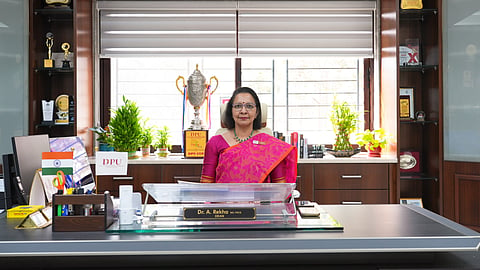
‘Develop a future-ready healthcare workforce’
How should the government and private medical education providers collaborate to educate the youth of our country to fulfil the PM's Skilled India Vision?
Medical education institutions run by the government and private enterprises must work together to create a more industry-aligned and accessible healthcare education ecosystem. Collaboration should focus on improving skill-based training, strengthening rural healthcare exposure and ensuring uniform academic quality across institutions. Public-private partnerships can help expand simulation centres, digital learning infrastructure and advanced clinical training opportunities. Joint research initiatives, faculty exchange programmes and common skill development platforms can also enhance learning outcomes. Greater integration between academia, healthcare providers and policymakers is necessary to ensure that students are trained not only for academic excellence but also for real-world healthcare delivery. Such collaborative efforts will contribute significantly towards fulfilling the Skilled India Vision by developing a competent, adaptable and future-ready healthcare workforce.
Over the years, how will artificial intelligence transform the Indian medical education sector?
Artificial intelligence will significantly transform medical education by improving learning methodologies, clinical decision-making and personalised education. AI-driven platforms can help students access adaptive learning modules, virtual patient simulations and real-time assessments, based on individual learning patterns. In clinical training, AI can support diagnostics, predictive analysis and treatment planning, helping students better understand evidence-based healthcare practices. AI will also assist faculty in curriculum planning, evaluation and research analysis. However, while technology will enhance efficiency and accessibility, human skills such as empathy, ethics, communication and clinical judgment will continue to remain central to medical practice. Institutions must therefore ensure a balanced integration of AI into medical education, while preserving the human aspects of patient care.
Do you think there is a mismatch between education and employment opportunities in India? Please elaborate…
There is a noticeable gap between academic training and industry expectations across several sectors, including healthcare. While students often receive strong theoretical education, practical exposure, interdisciplinary skills and workplace readiness may not always receive equal emphasis. In the medical sector, evolving healthcare delivery models require professionals who are technologically aware, adaptable and capable of working in multi-disciplinary environments. However, employment opportunities increasingly demand skills related to communication, leadership, digital health and evidence-based practice. Bridging this mismatch requires continuous curriculum updates, stronger industry-academia partnerships, skill-based learning and greater exposure to real-world healthcare settings. Educational institutions must focus on developing both technical competence and employability skills to better prepare graduates for changing professional landscapes.
Is India's medical education sector facing a shortage of good teachers? How do you think this challenge can be addressed?
The rapid expansion of medical institutions has created an increasing demand for experienced and qualified faculty members. While India has a strong pool of medical professionals, attracting and retaining skilled educators remains a challenge due to growing institutional requirements and evolving teaching expectations. Addressing this issue requires greater investment in faculty development, academic mentorship and continuous professional training. Institutions must also encourage research opportunities, career progression and technology-enabled teaching support to enhance academic engagement. Strengthening postgraduate teaching pathways and creating structured academic leadership programmes can further help develop future educators. A supportive academic ecosystem is essential for maintaining high standards of medical education.
What are the major challenges faced by the medical education sector in India today?
The medical education sector in India has been facing several significant challenges -- one of the foremost being developing workforce-ready, competent physicians, who possess not only strong clinical knowledge but also the practical skills, critical thinking abilities and professional values required to meet the evolving healthcare needs of the country. Another key challenge is a curriculum that needs constant revamping. Rapid advancements in medical science, healthcare technology, artificial intelligence, and treatment protocols require medical institutions to regularly update their teaching methodologies and course content to ensure graduates remain relevant in a dynamic healthcare environment.
Additionally, there is a growing need for dedicated academicians who can inspire and effectively engage a technologically adept student population. Today's medical students have access to vast amounts of information and digital learning tools, making it essential for educators to move beyond traditional teaching methods and embrace innovation, mentorship and interactive learning approaches.
Addressing these challenges is critical to ensuring that India's medical education system continues to produce competent healthcare professionals capable of delivering high-quality patient care, while adapting to the future of medicine.