
‘Focussed on community service’
The Indian education sector is at a critical transformation point, facing multiple systemic challenges, including infrastructure gaps such as the lack of digital classrooms, simulation labs, VR/AR facilities, and modern research infrastructure. There exists a significant digital divide, with unequal access to high-speed internet and technology, particularly in rural and tribal areas.
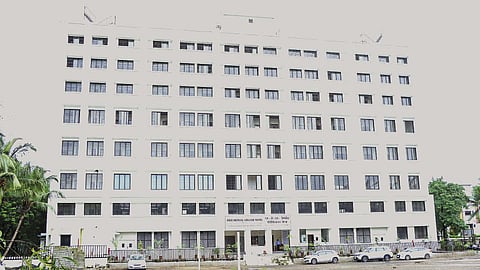
“Although accreditation and evaluation systems have been outdated, reforms by the National Medical Commission are actively underway,” affirms Sandhya Khadse, Maharashtra’s well-known academician, a reputed paediatrician, as also professor & dean, MGM Medical College, Nerul. “These challenges demand systemic reform, technology integration, and lifelong learning models.” MGM Medical Colleges operating in Maharashtra are affiliated with MGM Institute of Health Sciences (MGMIHS).

A gold-medallist, Khadse also serves the state government of Maharashtra as chief child health monitoring officer. She contends that a mismatch exists between education and employment opportunities in India. “Education often emphasises degrees over competencies, while employers seek problem-solving ability, adaptability, communication skills and technological proficiency,” she adds. “CBME reforms aim to bridge this gap by focusing on certifiable skills, internships, logbooks, mentoring and real-world exposure. Social dynamics, system pressures and social psychology also contribute to this mismatch. The solution lies in integrated, interdisciplinary and community-oriented education, rather than exam-oriented learning.” Khadse feels that government and private education providers in India must act as strategic partners, rather than parallel entities. Key collaboration areas include curriculum co-design aligned with CBME, industry needs and emerging technologies; creation of skill-based training ecosystems through simulation labs, telemedicine training, and community-based programs; public-private partnerships (PPP) for infrastructure development and faculty training; integration with NSDC for skilling doctors, nurses and allied health professionals; and shared digital platforms for MOOCs, micro learning and AI-based education tools. Such synergy will help convert India’s demographic dividend into a global workforce advantage.
AI will play a big role
Going forward, Artificial Intelligence (AI) is expected to reshape education in India, especially medical education fundamentally. AI will assist in diagnostics and learning through medical imaging, pathology, cardiology and predictive analytics. Personalised or ‘precision education’ will adapt learning to individual needs. Virtual reality and simulation-based training will replace purely observational learning. Big data analytics will support curriculum improvement and public health planning, while tele-education and tele-medicine training will remove geographical barriers.
To offer the best quality medical education in India, MGMIHS is rooted in future-ready and globally relevant education. “Plans include the establishment of state-of-the-art simulation centres, digital laboratories, VR/AR platforms and advanced cadaver labs; strengthening medical education units for continuous faculty development; promoting inter-disciplinary learning integrating medicine, data science and public health; expansion of research infrastructure in genomics, molecular biology, and precision medicine; and nurturing globally competent yet locally relevant healthcare professionals. MBBS graduates from MGM Medical Colleges are expected to develop a strong commitment to community service, understanding the realities of urban and rural marginalised populations through health camps, awareness and sensitisation programmes. The focus remains on quality, relevance and sustainability,” says Khadse. MGMIHS actively promotes global academic engagement through faculty and student exchange programmes, exposure to global best practices, collaborative research, conferences and interprofessional education models. Existing collaborations include research collaboration with the University of Limerick, Ireland; academic collaboration with Houston University, USA; and industry-academia collaboration with Arta Live Sdn Bhd, Malaysia.