
Water: From portable to potable
As a major developing country on the cusp of being a superpower, India possesses millions of gallons of drinkable bottled water. But when it comes to water coming through the taps, one is scared of even cleaning the floor with it, let alone washing one’s face or even attempting to drink it.
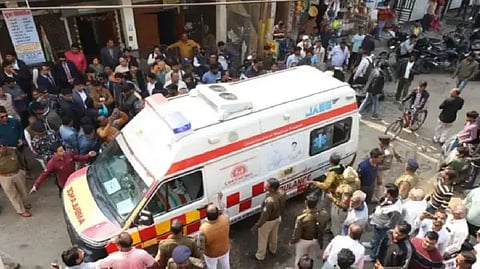
India faces a severe water crisis and records a low ranking on global water quality indices, with millions facing scarcity. It is ironic that, on the one hand, the government envisions a developed Bharat by 2047 while, on the other, it cannot even ensure that its people get to drink hygienic water. The laws in this country appear so inadequate when one hears of such tragedies as the one that recently struck Indore (supposedly the cleanest city of Madhya Pradesh), but actually, it is the implementation of these laws that stands compromised. The authorities have gone scot-free with zero accountability attached, as lives in this country come cheap and deaths come dear only to the family members!
These outbreaks are symptoms of broader challenges, including rapid urbanisation, pollution and inadequate water management. Besides Indore, recent water epidemics in cities like Gandhinagar and Bengaluru sickened thousands with diarrhoea, typhoid and hepatitis, causing several deaths. Our infrastructure is evidently of the Victorian era, and the municipal budgets, although earmarked for prevention of diseases (read clean water and modern sewers), somehow do not let the citizens see it being used the way it should be.
Globally, the World Health Organization (WHO) noted in August 2025 that one in four people still lack safe drinking water access. This seems to be a persistent crisis caused by climate change and urbanisation, leading therefore to significant health and economic impacts.
In late 2025/early 2026, over 5,000 people fell ill, and 34 died across 22 states in India, due to sewage-contamination in water pipes. The main causes are leaking pipes, ageing infrastructure and poor sanitation, which lead to sewage mixing up with drinking water. Viewed in a wider context, it is attributable to high levels of nitrates, fluoride and contaminants in groundwater. It is not as if the engineering department consists of quack engineers, but it is the apathy towards public hygiene, coupled with zero accountability, that leads to poor urban planning, which in turn, exacerbates the chances of water contamination. Furthermore, rapid urbanisation and careless development, including illegal constructions and fragmented sewage networks, cause sewage pipelines to rupture.
In the Indore water crisis, investigations revealed that faecal bacteria such as E. coli and Klebsiella, typically found in sewage, had infiltrated the Narmada water pipeline due to a structural failure, and this led to contamination of water distributed to a densely populated neighbourhood. In Gandhinagar, on the other hand, 100 suspected typhoid cases were caused by the contamination of drinking water due to multiple leaks in a newly laid water pipeline. Health authorities discovered that ongoing drainage repairs and potential damage from cable-laying work could have led to sewage seeping into the water lines, resulting in typhoid spreading through unsafe drinking water in several sectors. These examples of water contamination in major cities have created an appreciable amount of discomfort in city homes, reminding us that even fastest growing cities can fall prey to civic administration’s negligence, compromising the standards of safe drinking water security.

A robust water quality governance framework is the only way to move beyond revolutionary measures. State municipalities need to regularly indulge in:
* water source management – identifying and protecting reliable sources like rivers, lakes and groundwater;
* water treatment – operating treatment plants to remove pathogens, chemicals and sediments, using processes like flocculation, sedimentation, filtration and chlorination;
* infrastructure maintenance – maintaining pipes, reservoirs and distribution networks to prevent contamination during delivery;
* quality monitoring and regulation – regularly testing water quality and enforcing pollution control to meet health standards;
* wastewater management – testing sewage to remove pollutants before discharging effluent;
* public education – informing residents about water conservation, risks and proper usage;
* developing plans – creating comprehensive water management plans that set efficiency targets and identify improvements; and
* collaborating – working with government bodies for funding and policy, and working with citizens for local prevention efforts.
By fulfilling these roles, municipalities safeguard public health, support economic activity and promote environmental sustainability. Beyond the workplace, corporate involvement in potable water is a significant aspect of corporate social responsibility (CSR) for many reasons:
Human rights: Access to safe drinking water is recognised across the world as a human right.
Operational risk: Water is critical for numerous industries – from food and beverage to technology and mining. With sustainable management practices, water scarcity and quality issues can be resolved by corporations.
Cost-effective mechanism: Maintaining unpolluted water might require that firms install costly pollution control devices. Corporate profits often grow at the expense of the environment and natural resources. When formulating strategies for long-term viability, businesses should consider profitability, the health of local communities and sustainability and understand the relationship between them.
Municipal corporations, on the other hand, should pursue sustainable water practices, particularly by way of:
* reducing consumption of water in general;
* avoiding clean water waste and leakages;
* promoting public discourse by being transparent, because public pressure and negative publicity created by information disclosure can cause negligent companies to change their policies and operations;
* creating comprehensive plans for water pollution prevention. Recently, Mohan Yadav, chief minister, Madhya Pradesh, laid a foundation stone for Rs800 crore water supply for Indore from the Narmada River to ensure clean water.
Research shows that heavy water pollution reduces economic growth, having a cascading effect globally, as contamination in one region leads to a possible impurity in adjacent areas and so on and so forth. Water-borne diseases (cholera, typhoid) lead to high healthcare expenditure and lost wages from sick leave. Globally, billions of dollars are lost in economic opportunities because individuals – primarily women – must spend billions of hours collecting safe water, instead of engaging in income-generating work. Recent data indicate that, when the quality of water drops below critical biological thresholds, the associated region's GDP growth can fall as much as a third.
Long since recognised as a fundamental right under Article 21 (right to personal liberty), the right to safe drinking water, ensconced firmly as part of ‘right to life’ does not need the sanction of the law as an inalienable right. It is the very essence of our existence as our bodies are composed of 50-75 per cent water on average. A journey to Viksit Bharat is a long road, and one is bound to get thirsty periodically on the way!