
Embrace liberalisation
The appointment of Anup Bagchi as MD and CEO of HDFC Bank is welcome. He is a capable person and will be able to restore HDFC Bank’s pride of place as the numero uno bank in India. A veteran in financial services, Bagchi has served in the ICICI group for over 34 years. A chemical engineer from IIT Kanpur, Bagchi will have to ensure a proper brew and formula to turn around investor sentiment, which is currently at its nadir. The stock has seen a sharp erosion in value, with the share price falling sharply after the resignation of chairman Atanu Chakraborty.
Along with Bagchi, another important appointment was announced at another private sector bank. The RBI approved the appointment of Anup Kumar Saha, wholetime director and former executive director, as MD and CEO of Kotak Mahindra Bank. Anup Kumar Saha also holds an engineering degree (BTech) from IIT Kharagpur.
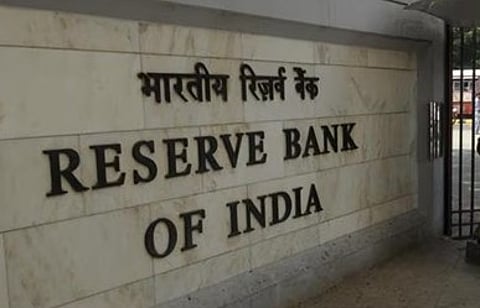
Two private sector banks got new MDs and CEOs with RBI approval. Does the RBI really need to play the role of the Godfather? While the banking sector was opened up in the
1990s and the private sector was allowed to have ownership rights in banks, the RBI seems reluctant to let go of its powers. While technically the nomination board of each bank selects the MD and CEO, this is always subject to RBI approval.
The RBI has full supervisory and inspection powers, but it is still unwilling to relinquish its power to choose. Informally, before an appointment is made, the selection of top officials is already discussed with the RBI, which later accords its formal approval. The RBI Act, 1934, does not empower the RBI to approve appointments. The Banking Regulation Act does. It states that: “No appointment, re-appointment, or termination of appointment of a chairman, managing or whole-time director, manager, or chief executive officer shall take effect unless made with the previous approval of the RBI.” In reality, however, banks are requested to submit proposals well in advance and provide a shortlist of candidates.
No other regulator gets involved in such micromanagement of the choice of leaders in private sector banks. In the USA, it is the board of directors that chooses a managing director, and the regulator can disapprove of a candidate only in rare cases, if the candidate is found not to be fit and proper. India and the UK are two countries where regulators vet candidates and give their approval. Board autonomy is an alien concept as far as regulators are concerned. Does SEBI require the pre-approval of an MD or CEO of a listed company?
Admittedly, public money is involved, and hence government approval is required. But consider the amount of micromanagement involved through daily, weekly and monthly reports. So much regulation and micromanagement should leave no scope for rogue banks or bank defaults, nor for multibillion-rupee write-offs in the banking sector every second or third year. Let the empowered board do its job and let the RBI intervene only in rare cases.
The self-imposed rule of having an outsider and an insider, even for PSU banks, is totally redundant. Parachuting one leader in from another bank for a period of 2-3 years serves no purpose. In fact, each bank has a culture of its own, and getting to know the staff, policies, internal workings and other key stakeholders takes a lot of time. Unless the RBI feels that all PSU banks are the same and the only difference is the nameplate of a PSU bank!
SBI, one of the most respected banks in the country, grooms its own leaders, and the top job is always filled from within. Why can’t the government and the RBI instead make it mandatory for banks to have a succession policy and encourage them to groom leaders from within? This would allow continuity in the vision and philosophy formulated by earlier leaders.
The government also needs to reconsider the retirement age. With increasing longevity, an extension of a year or two could easily be allowed. Take the case of Kaizad Bharucha, the deputy MD who was also considered for the post but rejected because he did not have the mandatory 3 years remaining until retirement. The heavens would not have fallen if he had been given a one-year extension. Bharucha resigned ahead of Bagchi taking up formal charge on 27 October, though he did address a town hall with Bagchi and share his vision.
The government and the RBI need to seriously rethink board empowerment and ease strangulatory regulations if they genuinely wish to attract foreign investment. Liberalisation needs to be implemented not just in law but also in spirit.