
Creating a new marine industry
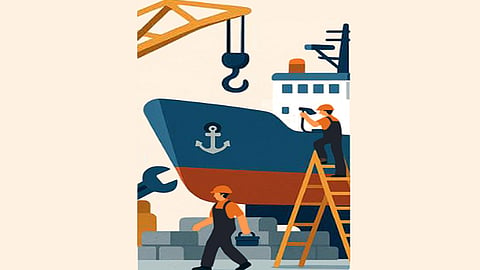
The PM, in one of his addresses to the nation through the popular Mann Ki Baat, spoke about developing a ship-repairing facility at Port Vadinar (between Kutch and Dwarka), comprising a jetty and floating docks. The project envisages an investment of Rs1,570 crore and will have the potential to service both large-scale and small vessels by building a world-class ship-repairing facility. This brownfield facility would be developed jointly by Cochin Shipyard and Deendayal Port Authority. The latter has developed Kandla and Vadinar, which houses an oil terminal servicing Nayara Energy (formerly Essar) and Indian Oil Corporation. The development of the ship-repairing facility will also lead to an entirely new ecosystem being developed in the nearby areas. The announcement by the PM will surely galvanise the state machinery into taking actionable steps to execute the project.
The government is taking the right steps in developing port-based infrastructure. India’s huge coastline of over 11,000 km (mainland and the islands of Andaman & Nicobar and Lakshadweep), one of India’s most valuable assets, is largely underutilised. The government, albeit belatedly, is taking steps to utilise it. The Sagarmala Project, which was launched in 2015, is a comprehensive programme comprising more than 800 projects and envisaging total investments of R5 lakh crore.
One component of the project involves the development of coastal shipping and inland waterway transport. Acceleration of this component assumes even more importance given the fuel crisis in the wake of the war with Iran and disruptions in logistics impacting crude and gas carriers. Development of coastal shipping also helps in reducing logistics costs.
Around 75 projects related to RoPax and passenger jetties, along with terminal buildings, have been identified. A few of the projects are under way, while several are still in the planning stage.
Given the number of beaches that can be developed, India can have at least a few Goa-like beaches in each of the coastal states, especially Gujarat, Maharashtra, Karnataka, Kerala, Tamil Nadu and Andhra Pradesh. Restoration and regular cleaning of beaches require a great deal of manpower.
In 2025, the World Bank approved a project to support coastal communities in India by protecting and conserving ecosystems, reducing plastic pollution, and providing more and diverse jobs for 100,000 people in Tamil Nadu and Karnataka. This Strengthening Coastal Resilience and Economy Project envisages an investment of $220 million.
There are several ideas that can be planned and executed, including more international ship-repairing projects and international bunkering projects. The main issue is to get the private sector to take on the onus of developing large projects and making them profitable.
Some incentives have to be provided to attract even international funds into these highly capital-intensive projects. The government could make all investments in the private, foreign and public sectors tax-free for the next 25 years, or have companies registered in India’s GIFT City in Gujarat. Tugboats, speedboats, yachts, carrier ships and RoRo boats all present major opportunities. The government should treat the tax holiday as an investment in the creation of lifetime income-generating assets. It will provide new avenues for investment for HNIs and ultra-HNIs, besides opening up opportunities for the corporate sector.
Another major change is required in the taxation of the income of all crew and personnel on vessels. This should be on the lines of taxation followed by other countries and should be equated with offshore personnel. This will not only encourage several mariners to work in India but also strengthen the domestic marine workforce. India has some of the best training schools, with people from the hinterland more than willing to train in India and work on offshore vessels.
If India really wants to attract tourists, it also needs to make changes in Coastal Regulation Zone norms. While allowing hotels to be built within 200 metres of a waterbody is a welcome step, hotels should also be allowed to come up even nearer to the high-tide mark. Kerala already has hotels where boats are allowed right into lagoon inlets up to the side entrance. With pristine beaches across India, this model can easily be replicated in other states.
Creating a conducive investment climate for the growth of the marine industry will transform the economies of coastal towns. New initiatives in bunkering, repairing and cruises will bring in large numbers of visitors, generating enough income to more than offset the investments made by the government in the initial phase. It will also herald the dawn of a new marine industry across India’s coastal regions.