
A stringent policy
The pattern is simple. More often than not, the announcement of an economic policy from the government (Union or even the states) is generally greeted by the industry bodies and associations. But the new EV policy announced by the Rekha Gupta government in Delhi has broadly defied this trend. Leading automobile associations and OEMs have chosen to respond with silence, which
simply reflects their displeasure. Too stringent on many fronts is what they will tell you privately.
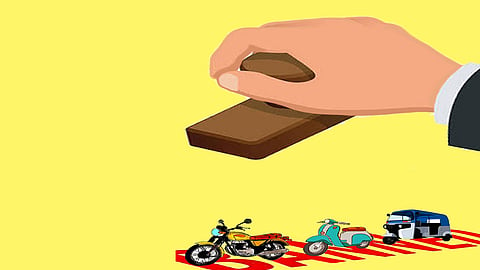
Labelled as Electric Vehicle Policy 2.0 for Delhi (the first EV policy for the state was launched in 2020), here is a quick look at its main offerings. The policy, which will have a validity of four years (1 July 2026-31 March 2030), aims to make Delhi a leading electric vehicle hub in the country by knocking off high-polluting vehicles (two-wheelers, three-wheelers, commercial vehicles and others) from the roads in a more rapid manner than ever before. And, to do this, the policy has set in motion a process whereby only electric versions of some vehicle segments will be registered. For instance, from early next year, only electric three-wheelers and N1 category trucks will be registered in India’s capital. And, come April 2028, scooters and motorcycles running on petrol will be put on the path of extinction on Delhi roads with the end of their registration. This segment accounts for 75 per cent of the new vehicles sold in Delhi today.
While setting up time-bound targets, the policy is also loaded with incentives for buyers. For instance, new buyers can avail waivers on registration and road tax. Buyers of two-wheelers will get incentives up to Rs30,000 in the first year, while for three-wheelers, it will go up to Rs50,000. Another way of doling out incentives would be for those who take scrapping routes for their old vehicles (mostly below BS-IV), starting with Rs10,000 for scooters, going up to Rs1 lakh for four-wheelers.
The Delhi government has further committed to spend Rs1,000 crore to ensure that the city has a public charging base of over 30,000 units by 2030.
The policy, however, has kept hybrid vehicles excluded from its ambit. The overall investment plan for this new policy is earmarked at Rs15,000 crore, including incentives of different kinds – also, in addition to the charging infrastructure capacity.
The core objective of the policy is to ensure that at least 30 per cent of the vehicles plying on Delhi roads are EVs by the end of this decade. Delhi is estimated to have a base of over 8 million registered vehicles now and is quite ahead of other leading metros in terms of vehicular volume. But, then, it is also ahead of India’s other leading cities when it
comes to air pollution. It is no secret to anybody that, during winters, the city turns into a gas chamber. And vehicular pollution is counted as a key contributor to this unfortunate trend.
Nobody in his right mind would ever say that a policy that intends to expedite EV adoption would be unpragmatic and uncalled for. In many countries, such time-bound policies have been initiated and have made a difference. So, in that context, Delhi’s new EV policy has the right intentions. The issue is that of practicality. Taking the sudden leap this policy is aiming at would need OEMs to support with adequate production and the larger public support.
Some 30 states and Union territories in India have dedicated EV policies that are all loaded with similar kinds of incentives. But none of them has set a deadline for banning registration of internal combustion engine (ICE) vehicles. And that probably makes Delhi’s policy the most stringent prescription declared so far. OEMs are naturally worried as it would mean loss of business in one of the leading sales turfs of the country. But they are equally concerned that this policy may become a new template nationally and become the reason for other states to follow suit.
While OEMs, especially of two-wheelers, where a price parity scenario is emerging with traditional petrol-driven models, have been ramping up their production capacity, a similar strategy by other states may make life difficult for them in the medium term. Immediate switch-over to only EV models in a huge volume category like two-wheelers will be no less than Mission Impossible (if their registrations are banned the way Delhi government
has decided to do). Similarly, the matching ramp-up of charging infrastructure remains a doubtful proposition, considering the past track record.