
India has maintained significant economic and energy interests in the Gulf, relying on the region for nearly 60 per cent of its petroleum imports, while the Gulf diaspora – primarily low-income workers – sends home about $50 billion annually, the single largest source in India’s total remittance pool of over $120 billion. The dependency is especially notable in the fertiliser sector, with over 40 per cent of India’s urea and phosphate sourced from the region. Following a drop in LNG output from Qatar, India has reduced production at three urea plants.
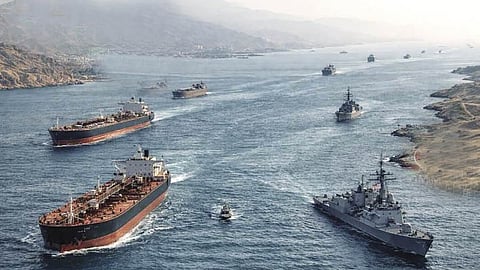
The Strait of Hormuz is a vital energy source through which about 90 per cent of India’s LPG imports and about 50 per cent of its crude oil imports normally pass. Household spending on cooking fuel rose by 7 per cent in the days between 2 and 9 March alone, and LPG prices increased by R60 and Rs144 for the 14.2 kg and 19 kg cylinder variants, respectively, triggering protests across India over LPG shortages.
The rupee slumped to a record low as the upheaval in the Middle East disrupted remittances and energy imports. India’s stock market fell for the fifth consecutive week as oil & gas prices continued to rise. The government moved fast on fuel taxes, slashing petrol duties from Rs13 per litre to Rs3 and removing the Rs10 duty on diesel. Petroleum Minister Hardeep Singh Puri cited it as a choice between raising prices and “taking a hit on our own finances”. International crude prices had, by his own public admission, gone ‘through the roof’ – from roughly $70 a barrel to about $122 in barely a month. The tax cuts were the right call, but they cost the exchequer heavily.
“India’s energy security will be impacted significantly, as it relies on the Middle East for a substantial portion of its energy requirements,” said Harsh V. Pant, vice-president, Observer Research Foundation, New Delhi. “Energy markets are already volatile, and costs are rising, which could eventually translate into broader economic and inflationary pressures.”

The cost to India’s diaspora has been immediate and stark. Some nine million Indians live across the Gulf countries. They collectively send about $50 billion, a significant sum of the total annual remittances, back home.
Deepa Kumar, head, Asia-Pacific country risk & co-lead, India research chapter, S&P Global, said that if the conflict lasts beyond six months, it will have a material impact on the Indian economy. Citi’s research note warned that, if the conflict lasts long, remittances would be ‘negatively impacted’, as income opportunities of the Indian diaspora get affected.
As of 30 March, eight Indians had died, and one was missing, with several injured. More than 550,000 passengers, including about 400,000 expatriate workers, had returned to India since the war began on 28 February. Families across Uttar Pradesh, Keralam, Tamil Nadu, Andhra Pradesh and Rajasthan waited for phones that rang less often than before.
A different world
Whatever ceasefire eventually comes after the ongoing ‘temporary break in attacks’, the world that emerges from this war will be different in many ways. Gulf governments will need to reassess their national security and economic strategies in ways that could have lasting consequences long after US operations in Iran have concluded. Years of doubts about the reliability of the US security guarantees are likely to grow.
The conflict has caused what many analysts describe as a systemic shock to the GCC economic model. It will be months before businesses can come back, as international tourists now stay away from the famed Dubai spots.
For India, the effect is immediate: the fuel bill, the falling rupee, the LPG queues, the nine million citizens in a war zone, the remittances under threat. Vaibhav Chaturvedi, senior fellow, Council of Energy, Environment & Water, said the conflict would likely drive short-term oil price increases and, if prolonged, dampen global growth.
The Iran war has taken a toll on India, simultaneously undercutting its energy security, remittances and geopolitical influence, making the country one of the biggest losers in a war it isn’t even fighting. And, in every city, town and village across this country, where a family’s monthly budget runs through a Gulf bank transfer, ordinary Indians are paying it.