
From passbooks to portfolios
For generations of Indians, the first formal relationship with money began with three familiar letters: SBI. Whether it was opening a savings account, depositing the first salary, buying a recurring deposit for a child’s education, investing in a fixed deposit for retirement or securing a home loan, the State Bank of India occupied a place that extended well beyond banking. It was often the first institution to which families entrusted their life’s savings. Across cities, towns and villages, the familiar keyhole logo came to represent security, stability and confidence. It was not merely a bank; it was an institution woven into the country’s social and economic fabric.
For decades, that relationship shaped the financial habits of millions. Saving, rather than investing, defined the Indian mindset. Households accumulated wealth through bank deposits, provident funds, gold and real estate. The passbook became a symbol of financial discipline, recording years of careful saving and prudent financial planning. Safety mattered more than returns. Preserving capital took precedence over creating wealth. Equity markets remained the domain of a relatively small community of investors, while mutual funds were viewed as products for the financially aware and the affluent.
That world has begun to change. Quietly at first, and then with remarkable speed, India has embarked on one of the most significant transformations in its financial history. Millions of households are moving beyond traditional savings instruments to market-linked investments. A new generation of investors is discovering the power of long-term wealth creation through mutual funds. Systematic Investment Plans (SIPs) have brought the discipline of monthly investing to ordinary households much as recurring deposits once encouraged disciplined saving. Investing has become less intimidating, more accessible and increasingly democratic.
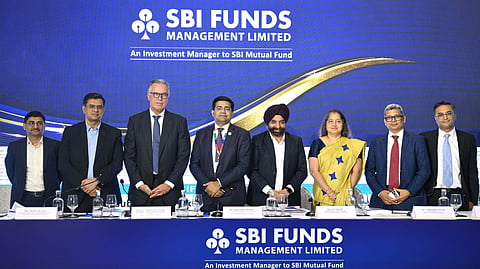
“The shift has been driven by a convergence of powerful forces. Financial inclusion has expanded dramatically through Jan Dhan accounts. Aadhaar-based digital verification has simplified customer onboarding. Smartphones, inexpensive mobile data and the Unified Payments Interface have brought financial services into the hands of millions. Paperless transactions have reduced the friction associated with investing. At the same time, sustained investor education by regulators and the mutual fund industry has encouraged households to look beyond guaranteed-return products towards long-term market participation,” explains Debasish Mishra, MD & CEO, SBI Funds Management Ltd (SBIFM).
Structural transformation
India’s financial landscape is consequently undergoing a structural transformation. According to Srinivas Jain, Executive President of SBIFM: “The country today has more than 950 million bank account holders, yet only about 61.4 million unique mutual fund investors. Mutual fund assets account for merely 18.5 per cent of GDP, significantly below the levels seen in several developed and emerging economies.”

Even with rapid growth over the past decade, mutual fund penetration remains remarkably low, suggesting that India’s investment journey is still in its early stages. The opportunity becomes even clearer when viewed through the prism of household savings. Indian households continue to park a substantial proportion of their financial wealth in bank deposits, even as allocations to mutual funds are growing at a much faster pace. Between FY22 and FY25, household financial assets expanded at a compound annual growth rate of 10.9 per cent, while investments in mutual funds grew at an extraordinary 42.6 per cent. The ratio of bank deposits to mutual fund investments has narrowed sharply during this period, reflecting a gradual but unmistakable migration from traditional savings to market-linked wealth creation.
This is more than a shift in asset allocation. It is a change in financial behaviour. Earlier generations measured prosperity by the balance recorded in a passbook. “Today’s investors increasingly track the growth of a diversified portfolio. The objective, however, remains remarkably similar – to provide for children’s education, buy a home, build retirement savings and achieve long-term financial security. What has changed is not the aspiration, but the path to achieving it,” says D P Singh, Joint CEO at SBIFM.
The transformation has profound implications for India’s financial sector. As household savings move steadily into capital markets, institutions that can combine trust, accessibility, investment expertise and technological capability are likely to emerge as the biggest beneficiaries. Asset management, once regarded as a niche segment of the financial services industry, is rapidly becoming central to India’s economic development. Domestic investors are playing an increasingly important role in providing stability to capital markets, reducing dependence on volatile foreign portfolio flows and creating a more resilient investment ecosystem.
Unique position
At the heart of this transformation is SBIFM, with its unique position in India’s financial landscape. It is not merely the country’s largest asset management company; it represents the convergence of two powerful structural trends. The first is the financialisation of household savings. The second is the enduring trust associated with India’s largest bank.
Originally incorporated in 1992, SBIFM traces its origins to the launch of SBI Mutual Fund in 1987 – the first mutual fund established outside the erstwhile Unit Trust of India. That pioneering initiative marked the beginning of competition in India’s mutual fund industry and laid the foundation for what would eventually become the country’s largest asset management franchise. Over nearly four decades, the institution has grown alongside India’s capital markets, adapting to changing investor preferences while maintaining its core emphasis on disciplined, long-term investing.
Its scale today is formidable. As of 31 March 2026, SBI Funds Management managed Rs12.5 lakh crore in quarterly average mutual fund assets under management (QAAUM), accounting for 15.3 per cent of the industry’s assets. When portfolio management services, advisory mandates, alternative investment funds and offshore schemes are included, total QAAUM rises to approximately Rs29.5 lakh crore. The company is also India’s largest passive asset manager, the leading manager of Specialised Investment Funds and the country’s biggest player in portfolio management and advisory services by assets under management.
Leadership, however, is only partly explained by size. India’s mutual fund industry has become intensely competitive. Established players such as HDFC AMC, ICICI Prudential AMC, Nippon India Mutual Fund, Kotak Mahindra AMC, Aditya Birla Sun Life AMC and a growing number of specialist fund houses compete aggressively across products, performance and distribution. Digital-first investment platforms have lowered barriers to entry for investors, while discount brokers and fintech companies have fundamentally altered the economics of customer acquisition and engagement.
In this environment, scale alone offers no guarantee of success. Asset management is ultimately a business built on confidence. Investors may compare returns, expense ratios and product features, but they entrust their savings to institutions they believe will remain dependable across market cycles. Consistency, governance, risk management and long-term credibility matter as much as short-term performance.
“Few financial institutions begin with the reservoir of trust that SBI enjoys. For more than seven decades, the bank has served as the primary financial institution for millions of Indians. Generations have opened their first accounts at SBI branches, deposited their first salaries and financed homes, businesses and education through the bank. That relationship has created an intangible but immensely valuable asset – trust accumulated over decades rather than years,” adds Mishra.
“SBIFM has built its franchise on that foundation while simultaneously transforming itself into a modern investment organisation with global capabilities. Three powerful forces have shaped its evolution. The first is the unparalleled distribution reach of the SBI. The second is its two-decade partnership with Amundi, one of the world’s largest asset managers, which has brought international investment expertise, research capability and global risk management practices. The third is a sustained investment in technology, digital platforms and data-driven decision-making, enabling the company to engage with investors across both physical and digital channels alike. Together, these have created a business model that few competitors can replicate.”
The company today is not simply managing mutual funds. It is participating in one of the largest structural shifts in modern India: the migration of household wealth from traditional savings to long-term investments. “As millions of first-time investors enter the financial system, the challenge is no longer merely to manage money. It is to build lasting relationships with investors who may be taking their very first steps into the capital markets. That is where SBIFM believes its greatest opportunity lies,” says Denys de Campigneulles, ED & Deputy CEO at SBIFM, representing Amundi.
For decades, the State Bank of India proudly called itself ‘The Banker to Every Indian’. SBIFM is now pursuing an equally ambitious objective – to become the fund manager to every Indian. It is a formidable aspiration in a country where mutual fund penetration remains low, yet millions of first-time investors enter the market every year.
The story of SBIFM is, therefore, much larger than the rise of a successful asset manager. It is the story of how India is gradually changing the way it thinks about money – and of an institution seeking to shape that journey, one investor at a time.
Built on trust
If trust gave SBIFM its foundation, scale has cemented its leadership. In an industry where fund rankings fluctuate with every market cycle, building India’s largest asset management company requires far more than a handful of successful schemes. It demands the ability to consistently attract new investors, retain existing ones, innovate across products, strengthen distribution and maintain investment discipline over decades rather than years.
Its leadership extends well beyond conventional mutual funds. SBIFM is India’s largest passive asset manager, commanding almost 28 per cent of that fast-growing segment. It also leads the country in Specialised Investment Funds (SIFs), portfolio management services and advisory mandates. Rather than depending on a single growth engine, it has built a diversified franchise spanning equity, debt, passive investing, alternatives and advisory services.
Such breadth has become increasingly important as investor preferences evolve. A decade ago, actively managed equity funds dominated the conversation. “Today, investors seek a wider range of solutions: from index funds and exchange-traded funds to portfolio management services, alternative investments and customised advisory mandates. Retirement planning, children’s education, tax-efficient investing and wealth preservation have created demand for a far more sophisticated investment ecosystem,” adds Jain.
SBIFM has consciously positioned itself across each of these segments instead of relying on any single product category. Its leadership in passive investing is particularly significant. As passive investing reshapes global asset management through lower costs, greater transparency and broad market exposure, India is following the same trajectory. With passive assets exceeding Rs4 lakh crore, SBIFM has secured a commanding position in what is likely to become one of the industry’s most important long-term growth drivers.
Yet numbers alone do not explain why investors continue to choose the country’s largest fund house. Unlike manufacturing, where leadership is often determined by physical capacity, asset management is fundamentally a business of confidence. Investors can transfer money with a few clicks. Products can be replicated. Technology has lowered barriers to entry. Sustainable leadership, therefore, depends on reputation, governance, investment discipline and the ability to deliver consistently across market cycles.
Beyond its balance sheet
This is where SBIFM enjoys an advantage that extends far beyond its balance sheet. Its parentage combines two complementary strengths. The State Bank of India contributes one of the country’s most trusted financial brands, an unparalleled domestic distribution network and relationships that span generations. Amundi, Europe’s largest asset manager, contributes global investment expertise, sophisticated research capabilities, product innovation and internationally benchmarked risk-management practices.
“Over more than two decades, this partnership has evolved from a financial joint venture into a deep strategic collaboration covering investment management, governance, technology, product development and risk management. The result is an institution that combines local reach with global capability,” adds Campigneulles.
Market analyst Arun Kejriwal, founder of KRIS, sees SBIFM not merely as another asset manager, but as a proxy for India’s long-term financialisation story. The post-pandemic surge in retail participation, expanding financial awareness, seamless digital access and sustained SIP inflows, he argues, have fundamentally broadened the industry’s investor base far beyond the country’s metropolitan centres.
That transformation has also raised investor expectations. Today’s investors expect more than competitive returns. They demand transparency, robust governance, professional fund management, technology-enabled service and world-class risk controls. Meeting those expectations requires sustained investment in people as much as in products.
SBI Funds Management today employs one of India’s largest investment teams, supported by experienced equity and fixed-income professionals, sector specialists, research analysts and risk managers. Its research platform tracks hundreds of listed companies and debt issuers, while relatively low attrition has helped preserve institutional knowledge and investment continuity: an often overlooked competitive advantage in an industry where consistency matters as much as performance.
Mishra believes that while markets, valuations and sentiment inevitably fluctuate, investor trust endures. That philosophy reflects the company’s long-term approach: building relationships that survive market cycles rather than merely chasing short-term asset growth. Ultimately, market leadership cannot be built on one exceptional year or a handful of successful schemes. It is earned through disciplined execution across changing economic conditions, interest-rate cycles and market environments.
Investors may celebrate returns during bull markets, but they judge institutions by the confidence they inspire when markets turn volatile. And confidence, however strong, must still reach investors.
That brings SBIFM to what is arguably its greatest competitive advantage, not simply the scale of the assets it manages, but the extraordinary distribution ecosystem through which it reaches millions of Indians.
The distribution machine
In asset management, performance builds credibility. Distribution builds leadership. A fund manager may have an outstanding investment team, a strong track record and an innovative product suite, but unless it can place those products before investors across the country, growth remains constrained. India’s mutual fund industry offers numerous examples of high-performing schemes that remained relatively small because they lacked distribution muscle, while institutions with trusted brands and extensive reach consistently attracted larger investor flows.
It is here that SBIFM enjoys an advantage few competitors can hope to replicate. Its distribution strength is not simply about numbers, though those are formidable. It is about an ecosystem that has evolved around the SBI franchise over decades. Rather than relying on a single sales channel, the company has built a multi-layered distribution architecture combining the country’s largest banking network, independent financial advisers, third-party distributors, wealth managers, fintech platforms and its own digital channels.
At the heart of this ecosystem lies the State Bank of India. With more than 23,000 branches spread across the country, SBI remains India’s largest banking network. For millions of Indians, particularly first-generation investors, the local SBI branch remains the first point of contact with the formal financial system. It is where savings accounts are opened, salaries are credited, loans are sanctioned and financial relationships are nurtured. That decades-old trust provides SBIFM with a customer franchise extending far beyond India’s metropolitan centres.
The next phase of growth, however, is not merely about adding more branches. It is about deepening relationships with customers who already trust the SBI brand.
The scale of that opportunity is extraordinary. Of SBI’s more than 530 million banking customers, only about 5.5 million currently invest through SBI Mutual Fund. In other words, nearly 99 per cent of the bank’s customer base remains untapped from an investment perspective. “We are just on the surface,” says Mishra. “India is still at a very early stage of mutual fund penetration. Increasing retail participation and expanding our market reach will remain our key priorities.”
He sees a larger historical parallel. Just as SBI played a transformative role in taking banking to every corner of the country, he believes the next chapter is about taking investing to millions of households that have traditionally confined themselves to savings accounts and fixed deposits.
That ambition is increasingly being powered by technology. Singh believes the introduction of Universal KYC could become a watershed for the industry. Once implemented, customers would be able to invest in mutual funds through SBI’s YONO platform almost as easily as opening a fixed deposit. “The biggest opportunity now is digital distribution,” adds Singh. “Given SBI’s customer base of over 530 million, we believe the SBI channel has significant headroom for growth.”
The opportunity extends well beyond acquiring new investors. According to Mishra, customers who combine traditional banking with investment products tend to build far deeper and more enduring relationships with the bank.
Internal assessments indicate that a customer with digital banking and a Systematic Investment Plan is several times more valuable over the long term than one maintaining only a conventional savings account.
Importantly, SBIFM is no longer dependent solely on its parent bank for growth. Its products are distributed through 94 banking partners, a nationwide network of more than 1.3 lakh independent financial advisers and distributors, wealth managers, institutional channels and third-party fintech platforms. The company also operates 277 dedicated branches, complementing SBI’s network with specialised investment expertise.
The result is a distribution model that blends physical reach with digital convenience. Its investment products are deeply integrated with YONO, one of India’s largest digital banking platforms, while its proprietary InvesTap application enables investors to complete onboarding, register SIPs, monitor portfolios and transact seamlessly through digital channels.
That transformation is already visible. More than 94 per cent of customer transactions are now executed digitally, while InvesTap has crossed four million registered users. Digital platforms developed for distributors and relationship managers process well over a million transactions every month, allowing advisers to spend less time on paperwork and more time helping customers plan their financial futures.
The breadth of this network is remarkable. SBIFM estimates that it reaches 98.2 per cent of India’s postal codes, giving it one of the deepest distribution footprints in the country’s financial services industry. For Kejriwal, this geographical reach becomes increasingly valuable as the industry’s centre of gravity shifts beyond the country’s largest cities. Rising incomes, improving digital connectivity and growing financial awareness are steadily expanding the mutual fund market across Tier II and Tier III cities, creating the next generation of retail investors.
For SBIFM, these markets are not peripheral: they represent the industry’s future. As first-time investors begin their financial journey through modest monthly SIPs rather than large lump-sum investments, the company’s combination of trusted relationships, physical presence and digital capability creates a structural advantage that is difficult to replicate.
Premsingh Rajput, Equity Research Analyst at AC Choksi Share Brokers Pvt Ltd, captures the distinction succinctly: “In asset management, performance creates credibility, but distribution creates scale.” SBIFM, he says, combines a strong investment platform with the unmatched reach and trust of the SBI ecosystem, creating a competitive advantage that few financial institutions can match.
Competition, meanwhile, is becoming more intense. Traditional rivals continue strengthening their own distribution capabilities even as fintech platforms, online investment portals and digital brokers redefine customer acquisition. Investors increasingly discover mutual funds through mobile apps and digital marketplaces as often as through bank branches. SBIFM has chosen not to view these channels as competing alternatives. Instead, it has embraced a hybrid model that combines the reassurance of personal relationships with the convenience of digital investing. Building an investment platform may take years. Building trust takes decades. SBIFM has had the benefit of both.
Distribution may bring investors through the door, but investment performance, governance and innovation persuade them to stay. That distinction has become increasingly important as India’s mutual fund industry has matured. Investors no longer choose a fund simply because of its parentage. They compare performance across market cycles, scrutinise fund managers, examine portfolio disclosures and expect seamless digital access, transparent communication and global standards of governance.
The challenge for every asset manager is therefore straightforward: while distribution attracts the first investment, sustained performance and investor experience determine whether that relationship endures. Asset management has become an increasingly knowledge-intensive business, where competitive advantage arises not from physical infrastructure but from research, analytical capability and disciplined investment processes. Experience remains one of the firm’s understated strengths.
Artificial intelligence
At SBIFM, artificial intelligence and advanced analytics are increasingly embedded across the organisation. AI supports investment research, automates routine processes, strengthens cyber security and compliance, and enhances surveillance capabilities to identify potential market abuse and insider-trading risks. For investors, the benefits are equally tangible: paperless onboarding, seamless transactions, real-time portfolio access and faster service across digital channels.
The transformation is already evident. More than 94 per cent of customer transactions are completed digitally through an integrated technology platform spanning customers, distributors and internal operations. The company’s InvesTap platform has crossed four million registered users, while digital applications for distributors and relationship managers process well over a million transactions every month.
The next challenge is no longer simply to remain India’s largest asset manager. It is to translate that leadership into sustained profitability, innovation and long-term shareholder value
Technology is also reshaping the way SBIFM reaches investors. Integration with SBI’s YONO ecosystem, together with the proposed rollout of Universal KYC, is expected to make mutual fund investing almost as simple as opening a fixed deposit, bringing millions of first-time investors into the formal investment ecosystem.
As the product universe expands – from actively managed equity and debt funds to exchange-traded funds, passive products, portfolio management services, alternative investment funds and Specialised Investment Funds – the need for disciplined research, robust governance and experienced fund managers has become even greater.
The company is also preparing for the next phase of diversification. Alongside its leadership in mutual funds, it is expanding its presence in portfolio management services, alternative investments and GIFT City opportunities. Management says acquisitions are not part of its immediate strategy, but it remains open to opportunities that complement its long-term growth plans.
The next challenge is no longer simply to remain India’s largest asset manager. It is to translate that leadership into sustained profitability, innovation and long-term shareholder value. Among India’s leading asset managers, SBI Funds Management operates with one of the industry’s lowest cost-to-QAAUM ratios, at around 0.08 per cent. Cost efficiency, however, is valuable not merely because it improves profitability. It also enables greater investment in technology, research, cyber security, customer service and talent without materially affecting margins.
Rajput of AC Choksi Share Brokers believes the opportunity extends well beyond gathering assets. “As India moves from physical savings towards financial assets, the opportunity is not simply about gathering AUM; it is about becoming the preferred destination for household wealth creation,” he says, adding that SBI Funds Management is uniquely positioned to benefit from this structural transformation.
Industry growth provides another powerful tailwind. According to CRISIL estimates cited by the company, India’s mutual fund assets could nearly double by FY2030, while portfolio management services and alternative investment funds are also expected to witness robust expansion. Passive investing, already one of the fastest-growing segments globally, is likely to become an increasingly important contributor to future growth.
For SBI Funds Management, this means future expansion will come from multiple engines rather than a single business line. Its mutual fund franchise remains the core business, but portfolio management services, advisory mandates, Specialised Investment Funds, alternative investments and international operations are steadily assuming greater importance. That diversification also addresses one of the questions frequently raised by investors.
IPO plans
The company’s decision to enter the capital markets reflects that maturity. The Rs11,693-crore initial public offering is entirely an Offer for Sale, with promoters State Bank of India and Amundi reducing part of their holdings while retaining majority ownership. The company itself is not raising fresh capital – an acknowledgement of the inherently cash-generative nature of the asset management business.
Mishra says the pricing philosophy has been equally deliberate. “We wanted the valuation to be meaningful for every participant. We wanted broad participation and also wanted to leave something on the table for investors.”
Independent brokerages have broadly viewed the pricing as reasonable. In its IPO analysis, Swastika Investmart compares SBIFM favourably with listed peers, noting that the company is entering the market at a valuation below several major asset management companies despite its leadership position and robust operating metrics. The brokerage has accordingly assigned a ‘subscribe’ rating, citing the company’s strong parentage, diversified business model and long-term growth potential.
For Kejriwal, the more important consideration is long-term value. Mature asset managers require relatively little incremental capital to expand. Their enduring strengths lie in trusted brands, strong distribution, disciplined investment processes and the ability to generate recurring fee income over long periods. IPO pricing, he believes, should therefore encourage both listing gains and sustained investor confidence.
The long runway
For all the progress India’s mutual fund industry has made over the past decade, its most remarkable characteristic may be how much of the journey still lies ahead. The headline numbers are impressive. Assets under management have grown rapidly. Systematic Investment Plans have become a household habit. Retail participation has expanded well beyond the country’s largest cities. Yet, measured against India’s population, household savings and economic potential, the industry remains strikingly underpenetrated.
Only about 61.4 million Indians currently invest in mutual funds, even though the country has more than 950 million bank account holders. Mutual fund assets account for just 18.5 per cent of GDP, leaving enormous headroom for growth as incomes rise, financial literacy improves and households increasingly embrace market-linked investments.
For decades, Indian families relied primarily on bank deposits, gold and real estate to build wealth. Those preferences are unlikely to disappear, nor should they. But the allocation of incremental savings is steadily changing. Younger investors are entering the workforce with greater financial awareness, easier digital access and a stronger appreciation of disciplined, long-term investing than previous generations.
The geography of growth is changing just as rapidly. The next wave of mutual fund expansion is unlikely to come only from Mumbai, Delhi or Bengaluru. It will increasingly emerge from Tier II and Tier III cities, district headquarters and smaller towns, where rising incomes, expanding digital connectivity and improving financial literacy are creating millions of first-time investors.
The opportunity also extends beyond mutual funds. Passive investing, portfolio management services, alternative investment funds, GIFT City initiatives and international operations are opening new avenues of growth even as retail participation continues to expand.
If that vision succeeds, the journey from passbooks to portfolios may well become one of the defining financial transformations of modern India.