
How Oyster ensures efficiency, scalability, and long-term performance
India’s renewable energy transition is entering a decisive phase. What began as a policy-driven push towards solar adoption has now evolved into a far more complex energy transformation involving grid modernisation, hybrid renewable systems, storage technologies, industrial decarbonisation, and round-the-clock clean power solutions. At the centre of this shift is a new generation of companies attempting to move beyond traditional solar development towards integrated energy ecosystems.
Among the emerging players in this space is Oyster Renewable Energy Pvt Ltd (Oyster Renewable), a Mumbai-based independent power producer (IPP) focused on developing large-scale hybrid renewable energy infrastructure for the commercial and industrial (C&I) sector. Founded in 2022 by Siddharth Bhatia, the company is building a portfolio centred around solar, wind, and battery energy storage integration aimed at supplying reliable green power to industries across the country.
Hybrid energy solutions
What differentiates Oyster Renewable from many conventional renewable developers is its focus on round-the-clock renewable power through hybrid energy solutions rather than standalone solar or wind projects. From concept to commissioning, it manages every stage of the project lifecycle, including design, investment, and operations, ensuring efficiency, scalability, and long-term performance. The company believes the future of India’s energy transition lies not merely in installing renewable capacity, but in ensuring reliability, stability, and scalability for industrial consumers that operate continuously.

The company is developing large-scale hybrid renewable energy and RTC (round-the-clock) projects catering to various companies. These projects are spread across states such as Madhya Pradesh, Gujarat, Andhra Pradesh, Kerala, Maharashtra, and Tamil Nadu. Today, Oyster Renewable already sits on a 1 GW portfolio (total investment of Rs7,500 crore), with portions already commissioned and the remainder expected to become operational by March 2027. The company is funding these projects through a combination of debt and equity.
Recently, Oyster Renewable achieved financial closure for its landmark 342 MW solar-wind hybrid power project in Madhya Pradesh. It secured a project loan of Rs1,844 crore from Union Bank of India with a tenure of around 20 years, marking one of the largest debt financings for a hybrid renewable project in the state.
The company collaborates with industry-leading technology and component partners to ensure reliable performance, long-term efficiency, and high-quality renewable installations. Some of its partners include Waaree, Suzlon, Vikram Solar, DMEC, Siemens Gamesa, Vyomaa, Sungrow, Hopewind, Leapton Solar, and Inox Wind.
Oyster Renewable is backed by the family office of Ratan Jindal, chairman of Jindal Stainless Ltd. Having acquired around a 30 per cent stake, Jindal is also the chairman of Oyster Renewable, which has an ambitious plan to build a 3.5 GW renewable energy portfolio by 2030 at an estimated investment of around Rs 30,000 crore. Having achieved a revenue of Rs339 crore in FY26, the company is aiming for a revenue of Rs700 crore in FY27 and Rs1,331 crore in FY28.
“Oyster Renewable was founded with two very clear objectives. First, we identified a significant gap in the renewable IPP market. While several platforms existed, very few were focused specifically on the C&I customer segment. Second, we wanted to build a true round-the-clock renewable energy platform: one capable of integrating hybrid solutions involving solar, wind, and eventually energy storage,” says Siddharth Bhatia, Managing Director & CEO, Oyster Renewable Energy Pvt Ltd.
“At Oyster Renewable, we are committed to spearheading the renewable energy revolution as an Independent Power Producer, founded with a vision to transform the way power is generated and consumed. At the heart of Oyster Renewable’s mission is the development, investment, and operation of cutting-edge renewable energy projects. These projects are strategically tailored to cater to the ever-growing needs of C&I consumers across India. With a keen eye on environmental sustainability, our projects are designed as hybrid systems, optimising the synergy between solar and wind capacities. This strategic blend not only ensures a consistent power supply but also reduces the carbon footprint,” adds Bhatia.
Among its flagship projects is a 315.6 MW solar-wind hybrid project for Jindal Stainless Ltd spread across Madhya Pradesh and Gujarat. Recently, Oyster Renewable announced the partial commissioning of this project in Agar-Malwa, Madhya Pradesh, marking a significant milestone in advancing clean energy adoption within India’s industrial sector.
The project, being developed at a total investment of over Rs2,000 crore, includes a committed investment of Rs132 crore from Jindal Stainless. It spans Madhya Pradesh and Gujarat, with around 216 MW of solar and wind power to be generated in Madhya Pradesh and an additional 99 MW in Gujarat. The project is currently being commissioned in phases, starting with the Madhya Pradesh facility, to be followed by the commissioning of the Gujarat facility.
Meaningful partnerships
Designed to support Jindal Stainless’ transition towards a cleaner and more resilient energy mix, the project reinforces the growing role of large-scale renewable infrastructure in driving industrial decarbonisation. The project integrates bifacial solar modules with tracker systems alongside advanced Suzlon 3.15 MW wind turbines in a co-located hybrid configuration. This design enables a more balanced renewable generation profile by harnessing both solar and wind resources, helping improve power availability and supporting the delivery of more stable renewable energy for industrial consumption.
The project, once fully operational, is expected to enable JSL to abate around 6.5 lakh metric tonnes of carbon emissions per year, while reinforcing the growing importance of hybrid renewable solutions in delivering reliable clean power to energy-intensive industries. With industrial demand for firm renewable energy increasing, projects such as this highlight the role of partnerships between renewable developers and industrial consumers in accelerating India’s clean energy transition.
“As we cater to the growing needs of the nation, sustainability continues to anchor our long-term growth strategy. Our partnership with Oyster Renewable for this hybrid renewable energy project represents an important step in strengthening our clean energy portfolio and reducing the carbon intensity of our operations. Large-scale renewable collaborations like these will play a crucial role in accelerating industrial decarbonisation across India,” says Abhyuday Jindal, Managing Director, Jindal Stainless Ltd.
“This project represents Oyster’s capability to develop and execute large-scale hybrid infrastructure with capital discipline and technological depth. Our self-developed asset for JSL reflects this approach, combining solar and wind to deliver stable, cost-efficient renewable energy while reducing carbon emissions by around 6.5 lakh tonnes per year. As India accelerates towards its net-zero ambitions, industrial decarbonisation will be pivotal. As industrial demand for firm clean energy accelerates, we remain focused on scaling our hybrid portfolio with execution precision, operational reliability, and responsible development,” states Bhatia.
The foundation of Oyster Renewable can be traced back to another venture founded by Bhatia: AB Energia Solutions Pvt Ltd. Established in 2014, AB Energia is a solar EPC company focused on delivering clean energy solutions. Initially, it focused on solar EPC services for commercial and industrial customers at a time when India’s renewable ecosystem was still in its early growth phase.
Bhatia’s own entry into the energy business was shaped by his family’s long-standing involvement in the electrical engineering sector. Before launching his entrepreneurial journey, he worked within the family business, which specialised in reactive power compensation products and electrical systems (Powercap Capacitors Pvt Ltd). That experience gave him practical exposure to how power infrastructure functioned within industrial facilities and commercial establishments.
After graduating in Business Management from the University of Sheffield and briefly working in private banking in London, Bhatia returned to India with the conviction that renewable energy would eventually become central to the global economy. He founded AB Energia with a vision of creating end-to-end renewable energy solutions for industrial clients.
Over time, AB Energia expanded into rooftop solar, floating solar, ground-mounted projects, and operations & maintenance services. The company has executed projects for industrial clients, hospitality companies, educational institutions, and government entities across India and overseas markets, including Bahrain and Guyana.
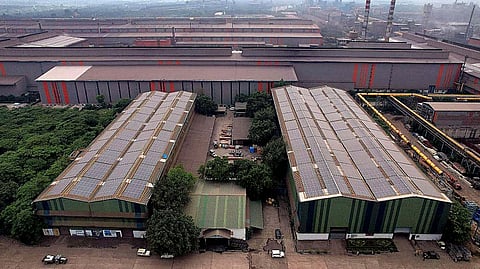
Among its major projects are solar installations for Jindal Stainless Ltd across facilities in Odisha and Haryana. The company has also commissioned rooftop and floating solar projects for multiple industrial facilities and institutions while gradually building execution capabilities in large-scale renewable infrastructure.
Today, AB Energia has evolved into a sizeable renewable EPC platform. The company closed FY26 with revenues of around Rs500 crore and is targeting nearly Rs1,000 crore in revenue in FY27 and over Rs2,000 crore by FY30. The company has recently expanded beyond EPC into manufacturing and distributed solar solutions.
Subsidiary AVIISII Electric Systems, launched in September 2025, is AB Energia’s manufacturing arm focused on solar mounting and steel structures used in solar power plants, while Arkannect, launched in April this year, is a distributed rooftop solar platform aimed at residential consumers and MSMEs. It offers end-to-end rooftop solar solutions, including consultation, financing, installation, monitoring, and maintenance. The expansion initially targets Maharashtra, Madhya Pradesh, Kerala, and Uttar Pradesh. Moreover, the company is also entering the BESS space and has plans to execute around 120 MW of BESS projects in Madhya Pradesh in FY27.
Leveraging avenues
“At AB Energia, we also saw opportunities for both backward and forward integration. As a result, we entered solar structure manufacturing through a fully automated production line. Since October 2025 alone, we have already supplied solar structures for nearly 180 MW worth of projects. We are now scaling production capacity further, with several hundred megawatts of orders already in the pipeline. At the same time, we recognised the enormous untapped potential of distributed rooftop solar in India. Every residential building, housing society, and small commercial establishment possesses unused rooftop space that can be converted into a power-generation asset. As per one estimate, the Indian rooftop solar market could reach nearly $50 billion by 2032,” states Bhatia.
“Despite the market’s scale, it remains highly fragmented. This insight led to the creation of Arkannect, a subsidiary of AB Energia focused on the B2C rooftop solar market. The idea behind this entity is simple: to bring the same quality, reliability, and execution capabilities we deliver for large-scale industrial projects to individual homeowners, societies, and small businesses,” he adds.
While AB Energia focused on engineering and execution, Bhatia increasingly recognised a larger opportunity emerging within India’s renewable energy landscape. C&I consumers were no longer merely looking for EPC contractors; they wanted dependable clean power that could reduce energy costs while helping them meet sustainability commitments. This became especially important as industries began facing rising grid tariffs, decarbonisation pressures, and ESG-linked expectations from global supply chains.
That insight led to the formation of Oyster Renewable in 2022 as a dedicated IPP platform. Unlike EPC players that build projects for clients, Oyster Renewable develops and owns renewable assets while selling electricity directly to commercial and industrial customers through long-term power purchase agreements (PPAs). The company’s strategic focus is centred on hybrid renewable energy systems combining solar and wind generation. This hybrid model addresses one of renewable energy’s biggest challenges – intermittency.
Solar power generation peaks during daytime hours, while wind patterns often strengthen during evenings and night-time hours. By integrating the two technologies within a unified platform, hybrid projects can create a more balanced and predictable energy profile capable of supporting industrial operations around the clock.
Oyster Renewable’s model is also closely aligned with India’s evolving regulatory ecosystem involving open access reforms, group captive frameworks, interstate transmission systems, and Green Energy Corridor infrastructure expansion. Under India’s group captive regulations, industrial consumers can directly procure renewable power by holding equity participation in projects and consuming a designated share of electricity generation. This structure enables customers to reduce overall power costs while gaining access to long-term renewable energy supply.
According to the company, Oyster Renewable does not primarily participate in government auction-based projects through agencies like SECI or state DISCOMs. Instead, it focuses on direct industrial off-takers that value reliability and hybrid renewable capacity.
While hybrid solar and wind integration already improves reliability, the next phase of renewable energy evolution is expected to be driven by battery energy storage systems (BESS). Storage technologies are increasingly being viewed as essential infrastructure for balancing renewable generation, stabilising grids, and enabling round-the-clock clean energy supply. Recognising this shift early, Oyster Renewable has begun integrating battery storage into its long-term strategy.
The company has recently finalised its first 70 MWh battery energy storage proof-of-concept installation, which will be integrated into one of its large hybrid renewable plants. The project is intended to validate operational performance and commercial viability before larger-scale deployment. Oyster Renewable has also entered into long-term arrangements for battery procurement over the next several years as it prepares for broader storage integration across future projects.
“We strongly believe that storage will define the future of renewable energy. We have recently finalised an order for our first 70 MWh battery energy storage proof-of-concept installation, which will be integrated into one of our large renewable plants of nearly 300 MW capacity. The objective is to validate the technology and operational model successfully. Following that, we already have a long-term agreement with one of the world’s largest battery manufacturers for nearly 1 GWh of battery supply over the next 30 months. Our aim is to become a truly round-the-clock clean energy provider,” states the company CEO.
Globally, falling battery prices and advances in energy management technologies are rapidly reshaping renewable economics. For industrial consumers, storage can help manage peak demand, improve power reliability, and optimise energy consumption patterns. In India, where renewable generation is rising rapidly, storage is expected to become increasingly important in balancing supply variability and supporting grid flexibility.
Clean energy transition
Industry experts believe the combination of solar, wind, and storage could eventually enable renewable platforms to compete directly with conventional thermal power for baseload industrial consumption.
“The company has positioned itself as a policy-focused and execution-centric renewable platform, actively aligning with India’s evolving renewable energy ecosystem, including open access reforms, Green Energy Corridor expansion, General Network Access (GNA), interstate transmission mechanisms, and industrial decarbonisation mandates. Oyster Renewable’s leadership consistently advocates infrastructure-led renewable growth, transmission readiness, and long-term policy stability to accelerate India’s clean energy transition,” says Bhatia.
All said and done, what makes the Oyster Renewable story particularly notable is that it reflects an attempt to build an integrated renewable energy ecosystem rather than a standalone power generation business. AB Energia focuses on EPC and industrial decarbonisation solutions. Oyster Renewable develops and owns hybrid renewable assets for industrial power supply. Arkannect addresses distributed rooftop solar adoption for households and small businesses. The manufacturing venture strengthens supply-chain capabilities within the group. Together, these businesses operate across multiple layers of India’s evolving energy economy – from utility-scale infrastructure and industrial power solutions to distributed solar adoption and manufacturing integration.
This layered approach also reflects how India’s renewable energy sector itself is evolving. For Bhatia and Oyster Renewable, the ambition extends beyond building megawatts. The broader objective appears to be creating a scalable clean energy platform aligned with the longterm transformation of India’s industrial and energy landscape. In many ways, the group’s evolution — from EPC execution to hybrid IPP infrastructure, storage integration, distributed solar, and manufacturing — mirrors the larger trajectory of India’s renewable energy sector itself: moving steadily from isolated projects towards interconnected energy ecosystems designed for a cleaner, more resilient future.