
Allana Group's consumer-centric shift: From bulk exports to branded products
Under Manish Bandlish, CEO & MD, Allana group, the consumer business is shifting from its traditional strengths in sourcing, processing and exports towards branded products, value-added manufacturing and a larger domestic market presence. For decades, the group had built its reputation on large-scale agri-business, food processing and international trade. And its strength in sourcing, manufacturing and exports provided it with a formidable operating foundation.
The new phase of growth, however, calls for a different set of capabilities: building consumer-facing brands, developing differentiated products and capturing a greater share of value across the food supply chain. At the centre of this transition is Allana Consumer Products Limited (ACPL), which seeks to evolve from a business anchored in processing and bulk exports into a more diversified, consumer-oriented food and FMCG enterprise.
The scale of the ambition is significant. Under the leadership of Bandlish, ACPL is targeting revenue growth from about Rs2,300 crore to Rs4,000 crore over the next two to three years. The plan envisages capital investment of Rs500-600 crore in India during the same period, alongside a broader push to strengthen domestic brands and expand into higher-value product categories.
The strategic imperative is to build on existing manufacturing and sourcing advantages while developing stronger links with end consumers. This means investing not only in capacity, but also in product innovation, brand development and routes to market.

“The agenda for me is to drive all the categories we have in India,” says Bandlish. “Depending on the business model and the business case, I envisage substantial capital investment in the near future. We are strong in sourcing and manufacturing and our next step will be to become more consumer-centric and develop brands that deliver value directly to consumers”.
Re-balancing the business
Exports remain central to ACPL’s business model, accounting for about two-thirds of turnover, with the Indian market contributing the balance. The company now intends to raise the domestic share to at least 40 per cent over the next two to three years. The objective is not to dilute its export franchise, but to broaden its sources of growth. A stronger domestic business would give ACPL a larger platform for building brands, developing consumer insights and scaling products in a market with diverse consumption patterns. At the same time, additional manufacturing capabilities could support the expansion of value-added and branded exports.
This transition requires co-ordination across businesses that have traditionally operated around distinct product categories and customer requirements. ACPL is therefore looking to integrate research and development capabilities across its dairy, bakery and beverage operations, creating opportunities to transfer technical expertise between categories.
The potential applications range from gelato and shelf-stable cakes to functional dairy products, yoghurt and protein-enriched foods. Such integration could help the company accelerate product development, improve manufacturing efficiencies and respond more quickly to emerging market opportunities.
For ACPL, the larger challenge is to translate its industrial scale into consumer relevance. Success will depend on its ability to combine reliable production with differentiated products, competitive pricing and effective distribution.
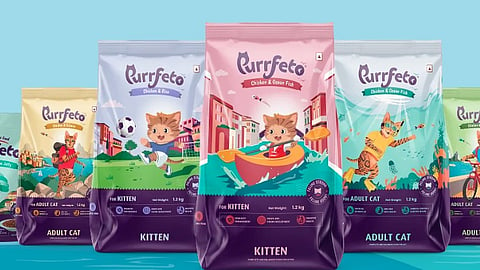
Pet food is emerging as a distinct growth business within ACPL’s portfolio. The company operates a large-scale pet food manufacturing facility near Hyderabad and has established a presence through its canine nutrition brand Bowlers and feline nutrition brand Purrfeto.
The division generates about Rs180 crore in annual revenue, with a target of R250-300 crore over the next two to three years. Reaching that goal will require more than expanding volumes. The portfolio is moving beyond entry-level products towards specialised nutrition, life-stage formulations and functional offerings designed for a broader range of pet needs.
The opportunity lies in serving a market where purchasing decisions increasingly extend beyond basic feeding to considerations such as nutritional quality, product suitability and affordability. For ACPL, manufacturing scale provides a platform to address these requirements while expanding its presence in India and international markets.
The commercial task will be to convert production capabilities into sustained brand preference, supported by portfolio development and wider market access. “Pet care is rapidly evolving in India from a functional category into a more nutrition-led and lifestyle-oriented market and Allana Consumer Products is investing to be at the forefront of that transition,” says Hakimuddin Bootwala, business head, Bowlers & Purrfeto. “The growth of our pet food business reflects not only the increasing number of pet parents, but also their willingness to seek better nutrition and more specialised products for their pets. With our brands Bowlers and Purrfeto, we focus on combining innovation, quality and affordability, while continuing to expand our product portfolio in line with changing consumer needs. Our large-scale manufacturing capabilities give us the ability to build this business for the long term, both in India and internationally”.
ACPL is also seeking to scale its frozen food business under the Home Fresh brand, addressing both household consumption and the institutional food-service market. Its portfolio spans frozen vegetables, culinary bases and convenience-oriented products.
No compromise on taste, quality
The strategy draws on the group’s established food-processing and sourcing capabilities, while responding to demand for products that simplify preparation without compromising taste or quality. Serving retail consumers and food-service operators also gives the business multiple routes to market, with different requirements around pack sizes, product formats and usage occasions. The immediate priority is to develop a broader portfolio and establish more consistent market access across regions. For the retail business, this means building familiarity and repeat purchase. In food service, the emphasis is on product consistency, operational convenience and dependable supply.
Scaling Home Fresh will, therefore, require close alignment between product development, cold-chain logistics and distribution. The opportunity is to turn existing processing expertise into a more visible branded business, rather than compete on manufacturing capability alone.
“The frozen food category in India is entering an exciting phase as consumers increasingly look for convenience without compromising taste and quality,” affirms Parag Gadre, business head, Home Fresh, ACPL. “For ACPL, this represents a significant growth opportunity because we can combine our food-processing expertise and sourcing capabilities with an understanding of evolving Indian consumption habits. We are building the frozen portfolio under the Home Fresh brand umbrella. With products that address everyday consumption as well as food-service demand, while continuing to innovate across formats and occasions. Our focus is not simply to add more products to the category, but to develop convenient, high-quality offerings that can become part of consumers’ regular eating habits. As ACPL continues to scale, frozen foods will be an important part of our ambition to build a broader, more innovative food business”.
In bakery ingredients, ACPL’s Pristine division operates a facility near Mumbai, with an annual capacity of 20,000 tonnes. Current capacity utilisation stands at 60-70 per cent, leaving scope to increase output as demand expands. The division is planning investments of R50-100 crore to broaden its product portfolio and strengthen its presence across industrial bakeries, artisanal patisseries, quick-service restaurant chains and other food-service customers. Planned areas of expansion include compound chocolates, artisan fillings and customised improvers.
The shift reflects an opportunity to move beyond conventional ingredients towards application-led solutions that address the operating needs of professional customers. Premixes, specialty mixes, toppings, fillings and improvers can help commercial bakeries standardise production, improve consistency and develop differentiated products.
Pristine’s growth will depend on its ability to combine technical expertise with close customer engagement. Its position within ACPL also offers the potential to draw on shared manufacturing and R&D capabilities, supporting product development for both Indian and overseas markets.
“Pristine’s growth has been driven by our ability to understand the evolving requirements of the B2B bakery and food-service industry and translate those needs into reliable, scalable solutions,” explains Naveen Hinduja, GM, Pristine. “As customers look for greater consistency, efficiency and differentiation, we are moving beyond conventional bakery ingredients to offer a broader range of premixes, specialty mixes, improvers, fillings, toppings and other application-led solutions. Our focus is on working closely with commercial bakeries, food-service businesses and professional customers to help them improve product quality, streamline operations and develop new offerings. As part of Allana Consumer Products, Pristine is well-positioned to leverage ACPL’s manufacturing capabilities and R&D strength to accelerate innovation and expand our presence across the bakery ecosystem, both in India and international markets”.
Coffee represents a major opportunity for ACPL to extend its capabilities from commodity processing into higher-value products. The company is positioned as India’s second-largest green coffee exporter and operates three processing plants across South India. Its proposed investment of Rs300-400 crore in a greenfield freeze-dried coffee facility marks a significant step towards value-added manufacturing. Freeze-dried coffee can serve both domestic and international markets, offering ACPL an opportunity to participate more directly in packaged and branded coffee categories.
The investment also reflects a broader strategic principle: leveraging established sourcing and processing capabilities to move into products that require greater technical sophistication and offer different routes to market.
But execution will be critical. The commercial returns will depend on capacity utilisation, product quality, access to customers and the ability to compete in established coffee markets. The project’s contribution to ACPL’s growth will ultimately be determined by how effectively the new capacity is matched with demand.
Alongside organic expansion, ACPL is evaluating targeted acquisitions in the fruits and vegetables segment. Such transactions could provide access to complementary capabilities, product portfolios or distribution networks, potentially accelerating entry into selected categories. The emphasis, however, will need to remain on strategic fit and the ability to integrate acquired operations into the broader business.
The execution test
ACPL’s transformation is ultimately a test of how effectively a large, established food-processing business can capture more value from its existing strengths. Its sourcing network, manufacturing infrastructure and export relationships provide a substantial operating base. The next stage requires those advantages to translate into stronger brands, differentiated products and more direct access to consumers and institutional customers.
The proposed Rs500-600 crore investment programme is central to that ambition, but capital deployment alone will not determine the outcome. Returns will depend on the pace of capacity utilisation, the quality of product innovation, distribution reach and the ability to build repeat demand across categories with different economics.
The portfolio also presents a balance between established B2B businesses and consumer-facing growth opportunities. Bakery ingredients offer a route to deepen relationships with professional customers; pet care and frozen foods provide branded-market opportunities; and freeze-dried coffee could expand ACPL’s participation in value-added processing. Each business will require a distinct approach to pricing, marketing, customer acquisition and profitability.
For Bandlish and his leadership team, the task is to bring these businesses together under a more integrated growth strategy without losing the operational strengths that underpin the group. If ACPL can execute that transition, it will be better positioned to diversify revenue, strengthen its domestic presence and build a broader portfolio of higher-value food and consumer products.
The Rs4,000-crore target sets the scale of the ambition. The more consequential measure will be whether the company can convert that growth into a durable, differentiated and profitable consumer business.