
The fine print that owns your future
Your start-up has finally landed a major investor. The valuation looks attractive. LinkedIn is preparing to describe you as a visionary disruptor. Somewhere, a venture capitalist is speaking warmly about partnership, alignment and long-term value creation. And now comes the paperwork.
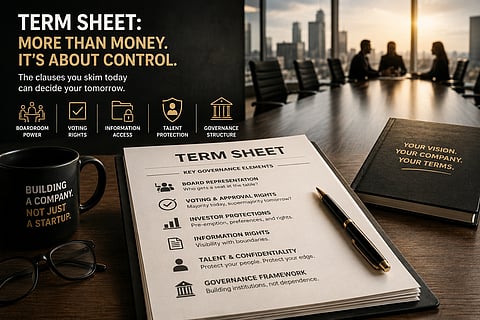
Enter the term sheet: that non-binding document that founders skim, while focusing on the number with the most zeros. Most entrepreneurs treat it as a financial document. In reality, it is a governance document disguised as a financial one. The valuation determines how much of the company you sell. The governance clauses determine who gets to influence it afterwards.
Many founder-investor disputes have had less to do with money and more to do with governance rights that nobody had paid sufficient attention to when the deal was signed. The honeymoon usually ends when the board meeting begins. The first thing every founder should examine is boardroom power.
Investors rarely write large cheques simply because they enjoy supporting entrepreneurship. They generally expect a seat at the table. How many directors will sit on the board? How many can the investor appoint? Does the company have any say over who those representatives will be? These questions matter more than founders realise.
An investor-director can be enormously valuable, bringing expertise, industry relationships, credibility and strategic guidance. Equally, they can bring an enthusiasm for oversight. Board observers deserve equal scrutiny. Investors request observer rights for associates, analysts or future investment partners. They may not vote, but they can attend discussions and access information. One observer sounds harmless. Several observers can make a start-up board meeting resemble a conference panel.
Founders should understand there is a limit on future board expansion. Can additional directors be added later? Who approves them? What happens if future funding rounds introduce new board representatives? Control is usually diluted slowly.
The next governance issue is about voting rights. Many founders think that they automatically retain control over major decisions. Term sheets introduce sophistication. Investors may seek approval rights over issuing new shares, raising debt, pursuing acquisitions, selling assets, changing corporate structures or approving future funding rounds. This is where terms like majority voting and supermajority voting become important.
A simple majority means most directors agree. A supermajority means specific investor observers or directors must agree. The difference can determine whether a company moves quickly or spends months negotiating with itself. Investors may also request preferred shares carrying special protections. These are common and justified. However, founders should understand exactly which decisions require investor approval.
The preemption provisions give existing investors the first opportunity to participate in future fundraising rounds. While common, they can significantly influence future capital-raising flexibility and negotiations with new investors. In governance, power is buried in legal language that nobody reads carefully enough until a disagreement arrives.
The third area is information access. Investors want visibility into the businesses they fund through monthly reports, quarterly reviews, financial statements, operating metrics and forecasts. This benefits the company. Many startups operate on equal parts ambition and spreadsheet optimism and investor reporting requirements frequently force stronger financial discipline, better forecasting and more professional management practices.
However, information rights need boundaries. How much information can investor-appointed directors share with their firms? What confidentiality obligations exist? What protections apply if the investor backs a competitor? These questions may seem unnecessary during the celebration of a funding round but become extremely relevant later.
Talent protection matters as well. Investors manage extensive portfolios, making anti-poaching provisions useful safeguards against key employees becoming recruitment targets elsewhere. Trust is valuable. Documentation is safer.
Finally, founders should pay close attention to governance structures investors want after investment. These may include formal board procedures, committees, governance policies, reporting systems and proper minuting practices. Investors may also seek influence over senior appointments, along with key-person provisions recognising the founder’s importance to the business.
Many entrepreneurs view such clauses as threats. More commonly, they are attempts to build an institution rather than a personality cult. Good governance rarely appears in pitch decks, but it prevents future crises. A term sheet is not just a capital agreement; it is the first draft of your future boardroom relationship. Read it carefully, because long after the money is spent, the governance clauses may still be deciding who runs the company.