
Juneteenth: Layered legacy
“You are America. Unconstrained by habit and convention. Unencumbered by what is, ready to seize what ought to be”
– President Barack H. Obama, US
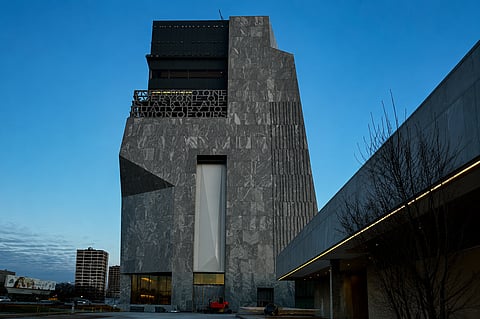
As the Obama Presidential Library opens to the public on the symbolic Juneteenth (19 June 2026), the $850 million edifice is in itself a Democratic metaphor of sorts. Designed by Tod Williams Billie Tsien Architects, the exterior emulates four hands cupped together – representing unity and the collective power of people. The five-foot-tall letters, set in the Gotham typeface (used during Obama’s Presidential campaign), clad the exteriors with monumental words from his speech, extending this metaphor and emphasising that history is shaped by collective action rather than individual legacy. In 2015, the then-President Barack Obama commemorated the 50th anniversary of the civil rights-era Selma to Montgomery marches in Alabama with the powerful words given above. “For everywhere in this country, there are first steps to be taken, there is new ground to cover, there are more bridges to be crossed,” he continued.
Slavery and indentured labour are colonial blots on humanity that the rains of time have not been able to wash away. The waves of nostalgic memories lost return as a reminder of generational angst that has changed the course of political, economic and personal histories, layered in lingering shreds of an idol, fragment of clothing, letters written and fading photographs, as the heart yields and surrenders to the past that has left generations wronged and writhing in an inexplicable dull ache that comes with the loss of identity.
Many museums around the world, from Lisbon to Liverpool to Washington DC to Cincinnati to Atlanta to Colonial Williamsburg to Chicago, have told the story of slavery, apartheid, human and civil rights in compelling ways, mixing meaning with material, through the lens of trials and triumphs. Monuments, memorials, enactments, movies, music, prose, poetry and plays have recreated moments and memories into experiences that remind us of a painful past, juxtaposed with the promise of possibilities.
The slave trade was also part of medieval and ancient India, with various ethnicities changing hands with conquests and as commodities. During the Delhi Sultanate (1206-1526), Hindus were enslaved and large numbers were exported to the Central Asian slave market. Subordinate iqta’dars ordered their armies to abduct Hindus less loyal to the Sultans in large numbers as a means of extracting revenue. Sultan Ala ud-Din Khalji (1296-1316) legalised the enslavement of non-Muslims who defaulted on their revenue payments.
Perhaps one of the least shared stories is the massive movement of slaves and indentured labour from the Indian sub-continent. Started by the Portuguese and the Dutch, with exports to Africa, Madagascar and the Mascarenes to the West and South-east Asia. An estimated 1.21 million slaves were held by various operating territories of the British East India Company in the 1830s. The abolition of slavery in the British Empire (1833) triggered a staggering labour crisis on colonial sugar, coffee and tea plantations.
To replace emancipated enslaved Africans, the British instituted the Indian indenture system, coercing and deceiving millions of impoverished natives into bonded, draconian, vague, overseas 5-10-year labour contracts. Derogatorily referred to as coolies, they faced severe overwork, abysmal living conditions and rampant disease – with some ships recording death rates exceeding 17 per cent during the journey and bodies being tossed overboard to prevent infection. Between 1834 and the 1920s, over 2.6 million Indians were transported to work on sugar, cotton and tea plantations, as also rail construction projects across 19 European colonies.
While the colonies profited, the recruitment process was deeply tied to the economic impoverishment of India. British de-industrialisation and exploitative land revenue systems (like the Zamindari system) ruined native handicrafts and forced millions off their lands, leaving them vulnerable to the deceptive and coercive recruiting tactics used by the arkati (recruiters). Although many returned home after their contracts ended, a significant majority chose to settle in the colonies. Today, descendants of these labourers form large, vibrant parts of the global Indian diaspora, significantly influencing the cultural, political and economic landscapes of countries like Fiji, Mauritius and Guyana.
There is no dedicated museum that exhibits centuries of colonial or pre-colonial exploitation, sufferings, resilience and triumphs of communities and individuals, who survived with their faith, traditions and beliefs. Many have gone on to hold high offices in the Commonwealth, become judges and heads of state. Their values and stories live through their deeds and determination for generations to cherish and behold.
The author is an India-born Commonwealth scholar and one of the world’s leading museum thinkers of our time. Founding director of four stellar institutions, he was honoured with the Queen Elizabeth II Platinum Jubilee Medal and served on the boards of International Council of Museums in the US and Canada