
The Indian sub-continent has spawned, nurtured and welcomed many faiths and religions over the millennia. From mainstream movements to tribal beliefs to symbiotic adaptations with nature, the rich history of faith is both layered and lineal. Hinduism, Christianity, Jainism, Buddhism, Islam, Sikhism, Zoroastrianism, Baha’i and Judaism – all thrive in the complex present-day populous India of 1.4 billion, making it a remarkable and unparalleled exemplar of inclusivity.
In the last several decades, India has been witnessing a steady rise in faith-based museums. From tiny interventions to massive megaliths, these institutions are a curious mix of academe, archaeology and an attempted semblance of curated content. With no dearth of visitors, these institutions are thriving destinations of the divine that attract people by the throngs, outstripping their poor cousins in the art and archaeology realm.
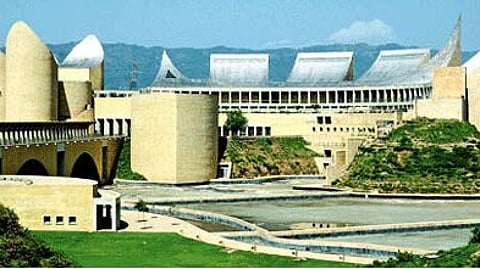
Decades ago, the chief minister of Punjab commissioned the world-famous Boston-based Israeli-Canadian Architect Moshe Safdie to envision a faith-driven Khalsa Heritage Museum on a 100-acre site in Anandpur Sahib, later named Virasat-e-khalsa. Against the backdrop of the Holy City and its historic enactments, the museum rose from a seven-acre water body, reaching up to the skies with inverted open petals, ushering in metaphoric light and enlightenment. The exhibit experience, spread across 250,000 sq ft, traces 500 years of illustrious Sikh history of faith-driven valour and sacrifice, prayer and piety, resolve and resilience of Universalism. Deploying prose and poetry through audio headsets, visitors walk through 25 galleries laced with indigenously developed exhibits that were produced by local artisans, artists, weavers, lantern-makers and embroiders, making content more relatable. The museum has since broken the Guinness World Records for the maximum number of visitors in a single day at any museum in India.

From the mixed-use Swaminarayan Akshardham in New Delhi that has welcomed millions since its inception to the massive 400,000 sq ft ISKCON complex of the Vedic Planetarium in the making in Mayapur, West Bengal, the faith-based intangible multi-media-infused museum-like experiences with curated content, projection-mapping, scale-models, iconic reproductions, illustrative art, touch-screen interactives and large-format film theatres are ruling the roost on a divergent trajectory from conventional museums that are struggling to find funds, audiences and patrons despite their institutional grounding and historic credentials. While this is not to undermine the voice and veracity of vital institutions that are at the soul of civil societies, there are lessons learned from cross-pollination of ideas, some more relevant and effective than others, that can benefit communities, while preserving the historic integrity of heritage and its neo-avatars in the making.
Sprawled across 50 acres on a larger 120-acre site, the impressive Abhay Prabhavana Museum in Pune celebrates timeless values of Jainism through an interesting blend of metaphor, art, reproductions and Audio-Visual Content in the world’s largest institution of its kind, located near the 2,200-year-old Pale Jain caves. This unique knowledge centre was envisioned by industrialist Abhay Firodia, who intends to add additional mini-museums celebrating Indian heritage, cuisine, contemporary art and sciences.
The lesser-known Ramkatha Museum was established in 1988 at Tulsi Smarak Bhavan in Ayodhya. A new Ayodhya Temple Museum has been envisaged on a 52-acre complex recently approved by the state government of Uttar Pradesh at a ceremony flagged by Prime Minister Modi. A massive Museum of Indian Temple Architecture is in the making with an international team of experts, and the world-famous historic Raza Library may transform into an inclusive museum facility, even as many other museum experiences and mixed-use faith-based exhibits are redefining the museum landscape in India.
Private donors, philanthropists, corporations and others are adapting and adopting new ways of communicating faith and legacy discourses. The Jatayu Earth Centre Nature Park in Kollam, Kerala, is one such facility that features the world’s largest 200 ft bird sculpture atop a rocky mountain in a blend of eco-tourism, faith, mythology, healing caves and cable cars. Jatayu symbolises the proverbial battle of consciousness against forces of evil, where this mythical eagle engaged in an air-battle against Ravana during Sita’s abduction, knowing fully well that his powers were limited.
These nouveau museums and hybrid configurations are here to stay, and many more will arrive in the public domain in the decades ahead. There is an opportunity to collaboratively harness the momentum of museums that extoll a path of purpose, for the greater good.