
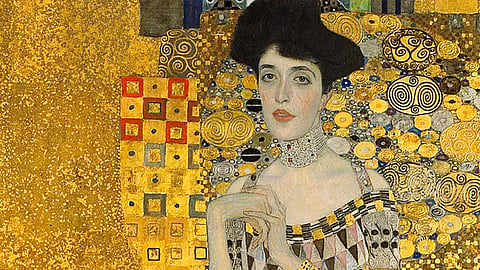
The Metropolitan Museum of Art (The Met) and the Neue Galerie – a celebrated museum for 20th-century German and Austrian art – will officially merge in 2028. The Neue Galerie will remain in its historic Beaux-Arts mansion on Fifth Avenue in New York, operating as the Met Ronald S. Lauder Neue Galerie – named after the American billionaire of the Estee Lauder fortune – a long-term friend of President Donald Trump, who is known to have nudged him to purchase Greenland.
Lauder opened the Neue Galerie in New York in 2001, a museum dedicated to early 20th-century art and medieval armour from Germany and Austria, with the world’s best collections of works by genius artist Egon Schiele, known for his haunting intensity. On 18 June 2006, he purchased from Maria Altmann and her family, the painting Portrait of Adele Bloch-Bauer I by Gustav Klimt for $135 million, the highest price ever paid for a painting at that time. Klimt’s Portrait of Elisabeth Lederer was auctioned at Sotheby's in New York for a record-breaking $236.4 million in November 2025 to an anonymous telephone bidder. The painting was consigned by the estate of Estée Lauder heir Leonard A. Lauder, who originally acquired it in the mid-1980s.
The mega merger of these two museums in New York is both unique and significant in more than one way. First, by absorbing 600 works of German and Austrian modernist art, the $6 billion valued Met gains from the $1.2 billion art collection in stature, augmenting its encyclopedic archive and assets.
According to Max Hollein, The Met’s Marina Kellen French Director and CEO, Ronald Lauder is a collector like none other. Among his many areas of connoisseurship, fin de siècle art from Austria and Germany is closest to his heart. Lauder has established a museum that itself is a work of art and ultimately a profound reflection of his passion, expertise and philanthropy. Second, it brings institutional resources of conservation, insurance, security, display and education to a comprehensive platform. Third, the merger brings a windfall $200 million cash infusion to the Met, in addition to 13 paintings from the private collection of Lauder and his daughter Aerin. To the world of museums and art, this is exponential efficacy and access to cultural legacy in perpetuity.
Examples of collective repositories, museum complexes, cultural districts, multi-museum precincts, multiple museums and zoo under the Smithsonian umbrella, abound with varying degrees of success and coordinated curatorial advantage around the world. There are interesting implications to the merger model that allows for effective engagement and an expansive visitor experience. The principles that apply to corporate mergers and acquisitions can serve as the framework for museum mergers and centralised services.

A tangential version of this has been at play for nearly 50 years in India, since the National Council of Science Museums was founded in 1978 under the ministry for culture. It oversees the largest network of 26 science museums in the world with a massive footfall of 14 million visitors a year. Its centralised administration ensures resource pooling for effective and efficient use of limited budget, enables coordinated programming, production of curated content and generation of exhibits. It offers cohesive marketing, social media presence and branding for the collective enhancement of evolving visitor experiences, while ensuring the uniqueness of regional identities and relevance of interpretive curated content.
Possibilities of mergers can be explored for museums under the Central government, in conjunction with optimised co-operation with state-run museums. Subsidised services, collation of collections, cross-referencing of artifacts, AI-driven search engines for material archives and exploring new dimensions to untapped resources – they all could be the spring-board of a new era in museum management resolving many of the issues that have gone unaddressed for a century, and perhaps beyond.
Implementing this adaptive new model requires advocacy and creation of a series of layered pro-active frameworks for facilitating mutually beneficial functional arrangements entwined in equity, empowerment, empathy, efficiency, experimentation and excellence. The combinatory models must draw their metrics from a viable matrix that analyses both qualitative and quantitative analytics, while carefully considering the stress test of short- and long-term operational viability in an era of changing demographics and evolving technology.
There is a need for ongoing collective dialogue on preserving and presenting heritage beyond the staid papers at conclaves and symposiums. It is time to table short and long-term juxtaposed with enablers to overcome the oft-cited impediments of money and manpower. The notion of the merger of minds is a vital investment in ensuring that the cultural soul of civilisations and civil societies is kept alive and celebrated for future generations in the galleries and collections of museums. It is said that the quickest point in time is anticipation and that one cannot let the wait for perfection be the enemy of the greater good.
The author is an India-born Commonwealth scholar, Fellow of the Royal Canadian Geographical Society, advisor to UNEP, author of books on the future of museums and the founding director of several award-winning museums. He also has served on the boards of Commonwealth Association of Museums and International Council of Museums in the US and Canada