
Global headwinds hit the aviation sector
The war in West Asia has impacted not just the supplies; it has also increased the cost of crude in the international market, which has been hovering over $100 per barrel. As a result, the cost of aviation turbine fuel (ATF) has increased by 25 per cent for domestic carriers in India. Airlines in India are welcoming the government’s decision to cap the increase at 25 per cent for now.
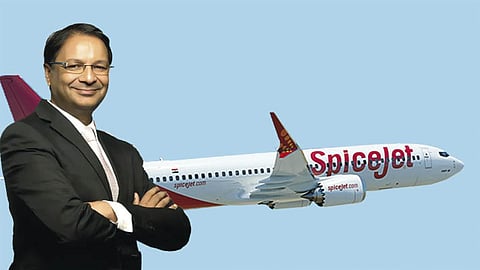
“The government’s decision to allow only a partial increase in ATF prices comes as a significant relief for the Indian aviation industry at a time of unprecedented global uncertainty,” says Ajay Singh, CMD, SpiceJet. “We sincerely thank Ram Mohan Naidu Kinjarapu, minister for civil aviation, and Samir Sinha, secretary, ministry for civil aviation, for their leadership and proactive intervention in securing a moderated adjustment to ATF prices. Their timely intervention will go a long way in helping airlines navigate one of the most challenging global crises in recent times, marked by severe external disruptions and volatility in fuel markets. The government has, time and again, demonstrated strong and reassuring leadership, steering Indian aviation through global headwinds with clarity and resolve. This decision once again reinforces that commitment”.

IndiGo Airlines, too, has expressed its gratitude to the government for the marginal hike. “This marks a meaningful way forward, enabling greater stability for airlines and allowing us to pass on the benefits through more accessible and affordable travel for our customers,” adds IndiGo Airlines.
Shielding passengers
The price rise would amount to an increase of R15 per litre. Had the price been hiked further, flying would have become unviable for the airlines. “We are grateful to PM Modi and Petroleum Minister Hardeep Puri for this timely and considerate intervention on ATF pricing,” affirms Naidu. “This calibrated approach will help shield passengers from sharp fare increases, ease the burden on domestic airlines, and support the continued stability of the aviation sector at this crucial juncture. It will also benefit the broader economy, by ensuring the smooth movement of cargo and maintaining vital air connectivity for trade and logistics”.
However, international carriers will have to bear a 100 per cent cost escalation as per the global pricing. It may be noted that, in Delhi, the cost of international and charter operations has crossed the Rs2 lakh per kl mark for the first time.
ATF prices were deregulated in 2001 and are revised on a monthly basis, based on a formula of international benchmarks. Due to the closure of the Strait of Hormuz, the price of ATF for domestic markets was expected to increase by more than 100 per cent on 1 April. To insulate the domestic travel costs from a substantial increase in international prices, PSU oil marketing companies in consultation with the ministry for civil aviation, have passed only a partial and staggered increase of 25 per cent (Rs15 per litre) to the airlines. Foreign routes will pay for the full increase in the ATF prices, consistent with what they pay in other parts of the world.
As ATF comprises nearly 45 per cent of an airline’s operating costs, any escalation in this price converts into increased airfares. The minister for aviation has urged all states in India to reduce the value-added tax (VAT) for aviation fuel, which is as high as 29 per cent in some states.u